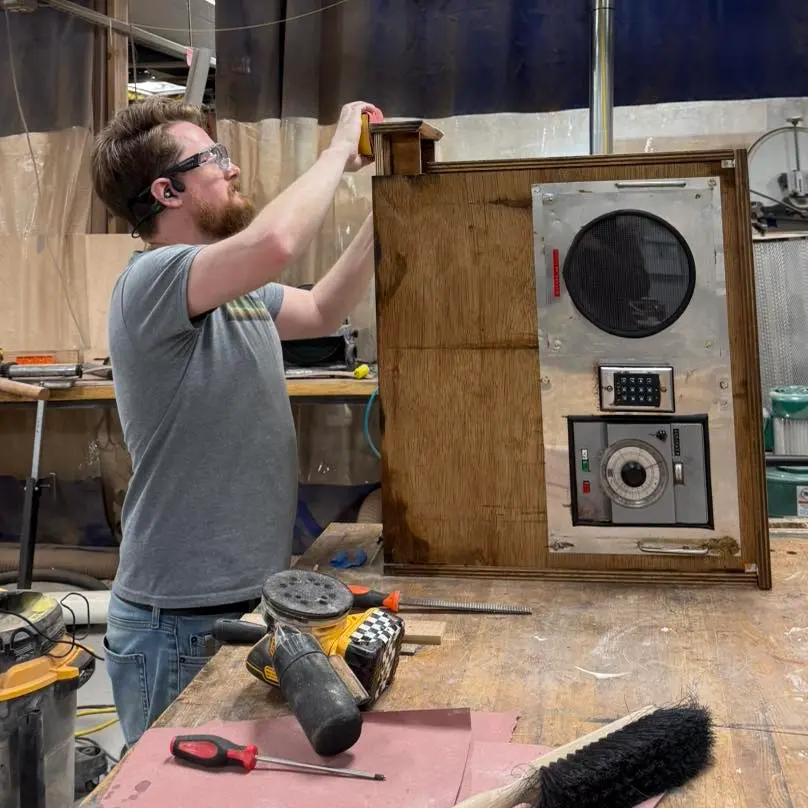
Shop floor / No. 003

EKG Machine Clue Cabinet

Animated, aged, abandoned hospital equipment with a secret.

Date
Oct 2025
Location
Fairfax, VA
Media
16 photos · 5 videos
EKG Machine Clue Cabinet

The brief

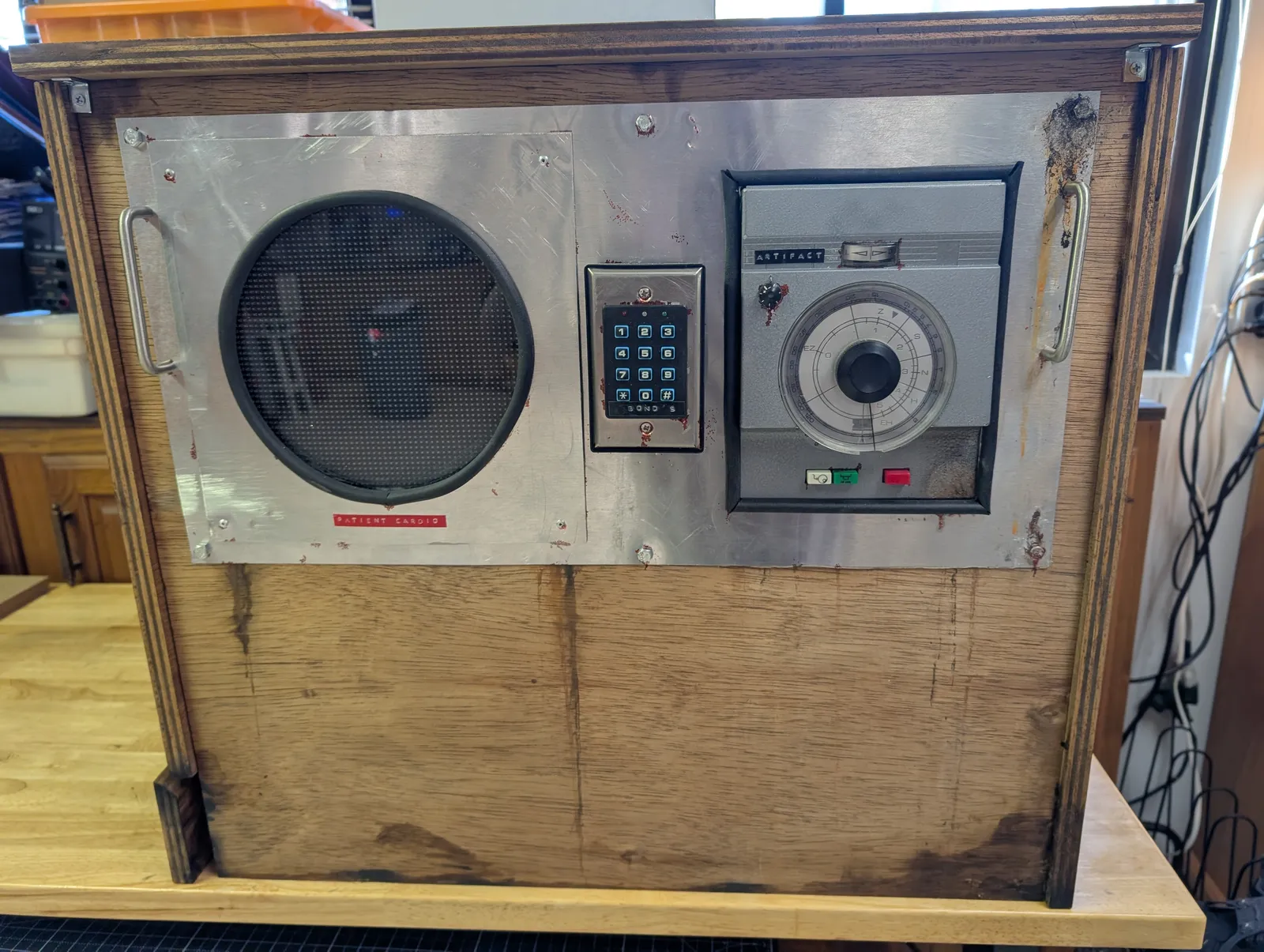
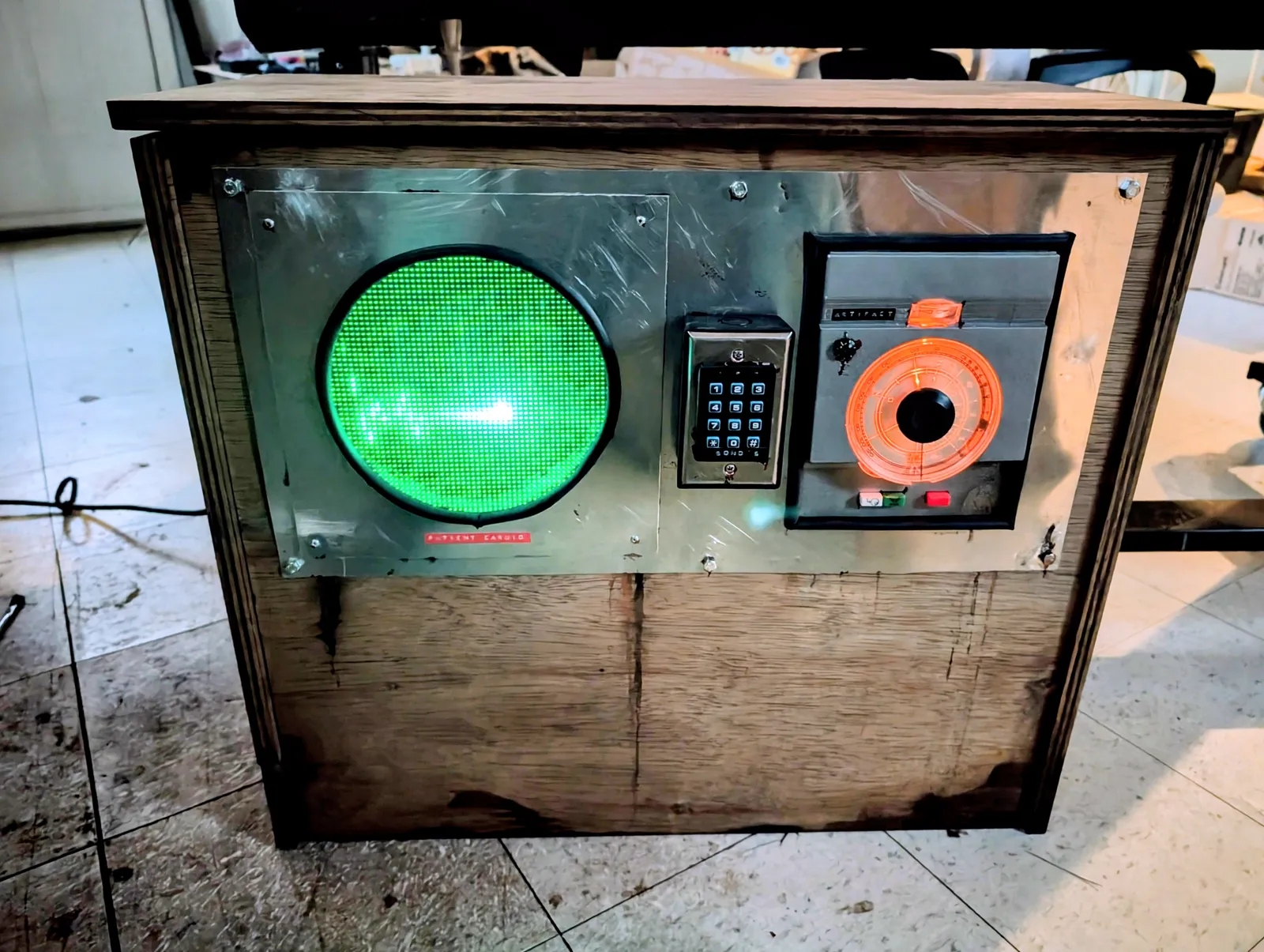
A local escape room was seeking collaboration with local propmakers. After some consultation, I was asked to create a new and engaging container for an existing puzzle clue. The theme for the escape room was a midcentury abandoned hospital. We decided on a piece of abandoned medical machinery. It would incorporate a distressed appearance, a keypad, a magnetic locking, spring-loaded hidden door, an animated display, and some engaging dials, buttons, and knobs.

Build log

8 entries

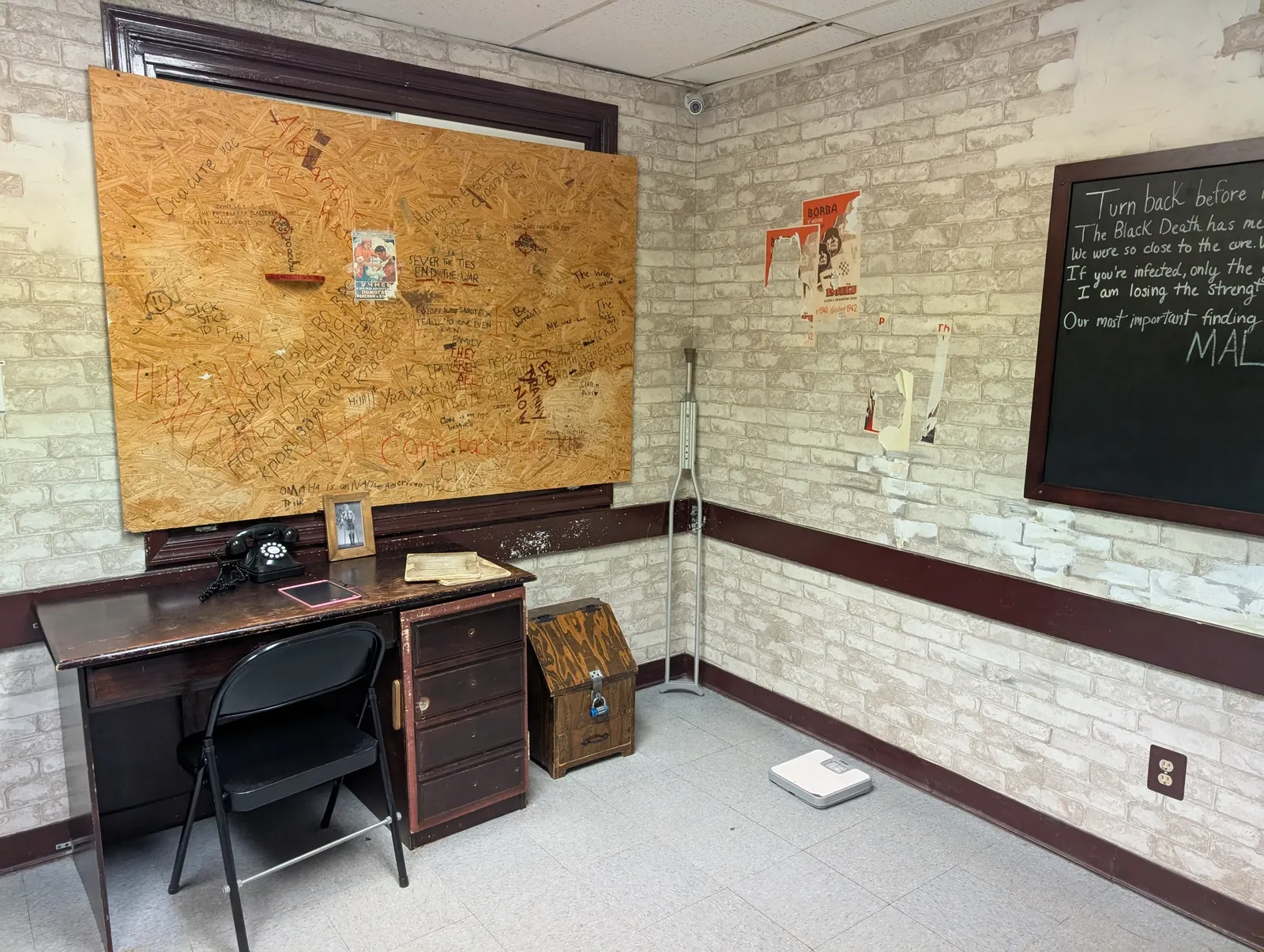
This abandoned wartime hospital room was in need of a unique piece for clue storage behind a keypad lock. The client requested that it accommodate an existing object's dimensions inside, fit beneath the existing wall guard, and accommodate concealed electrical connection to the outlet. It would be bracketed permanently to the wall with a zero-clearance gap, so escape game players would not reach behind it. It would contain a hidden drawer to contain the clue, which should be non-removable to prevent curious gamers from damaging it.
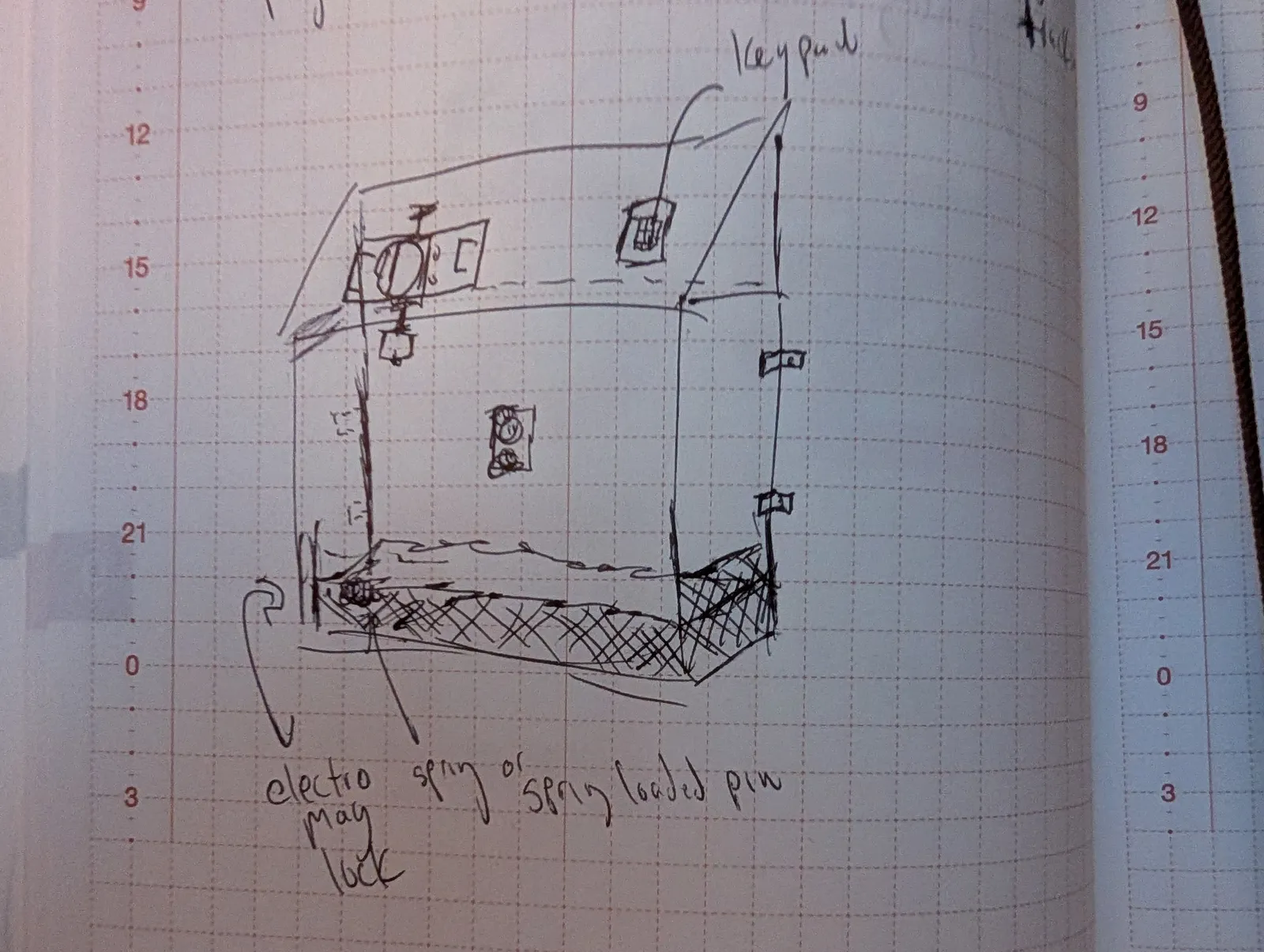
Initial concept sketches.

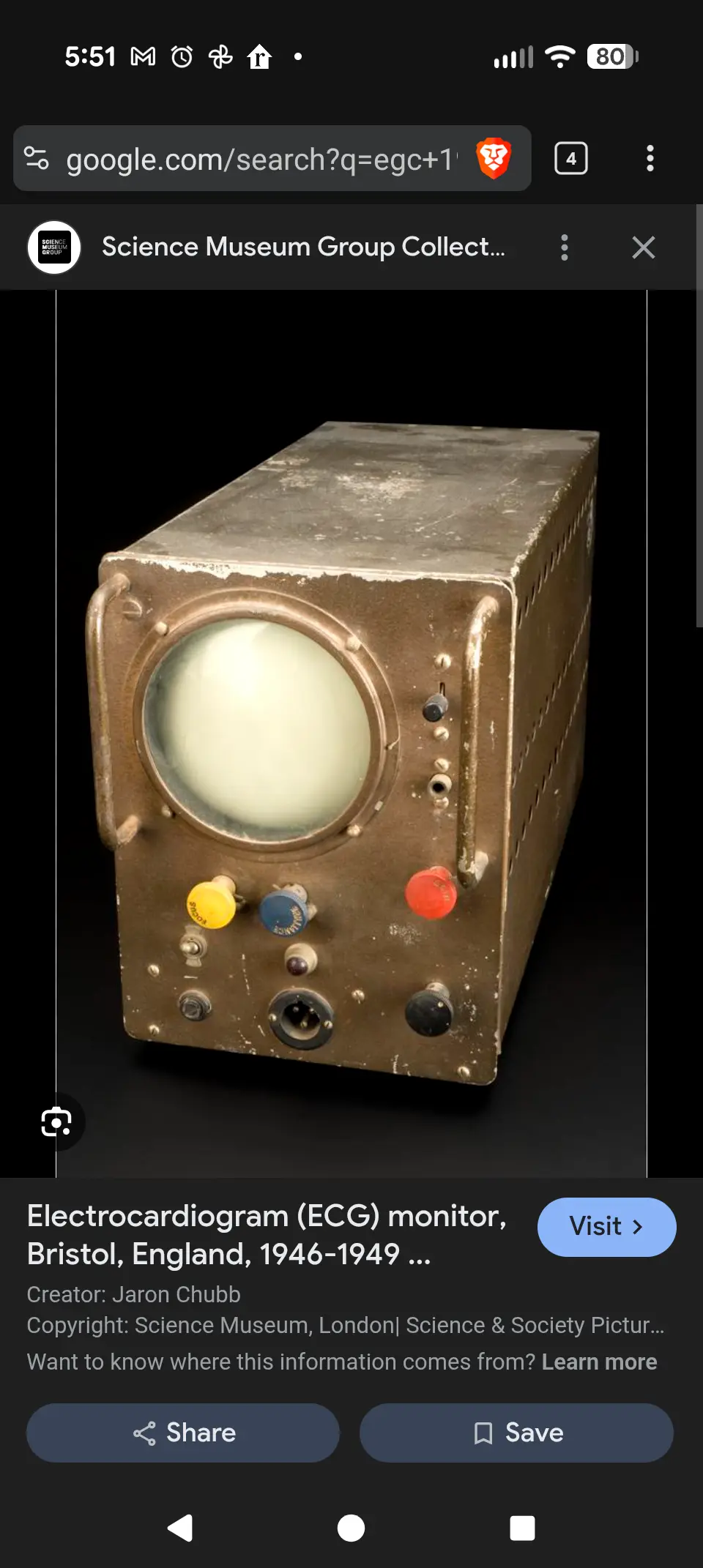
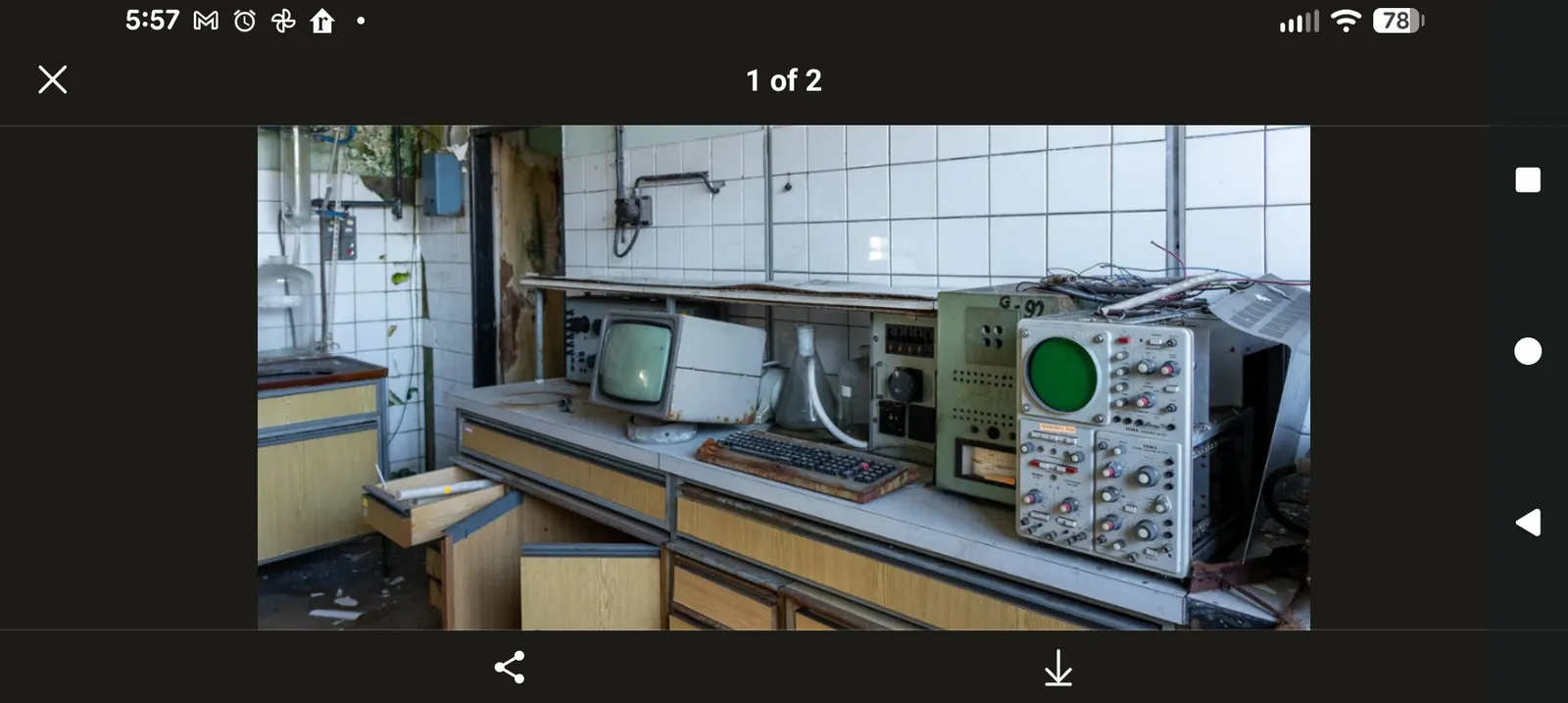
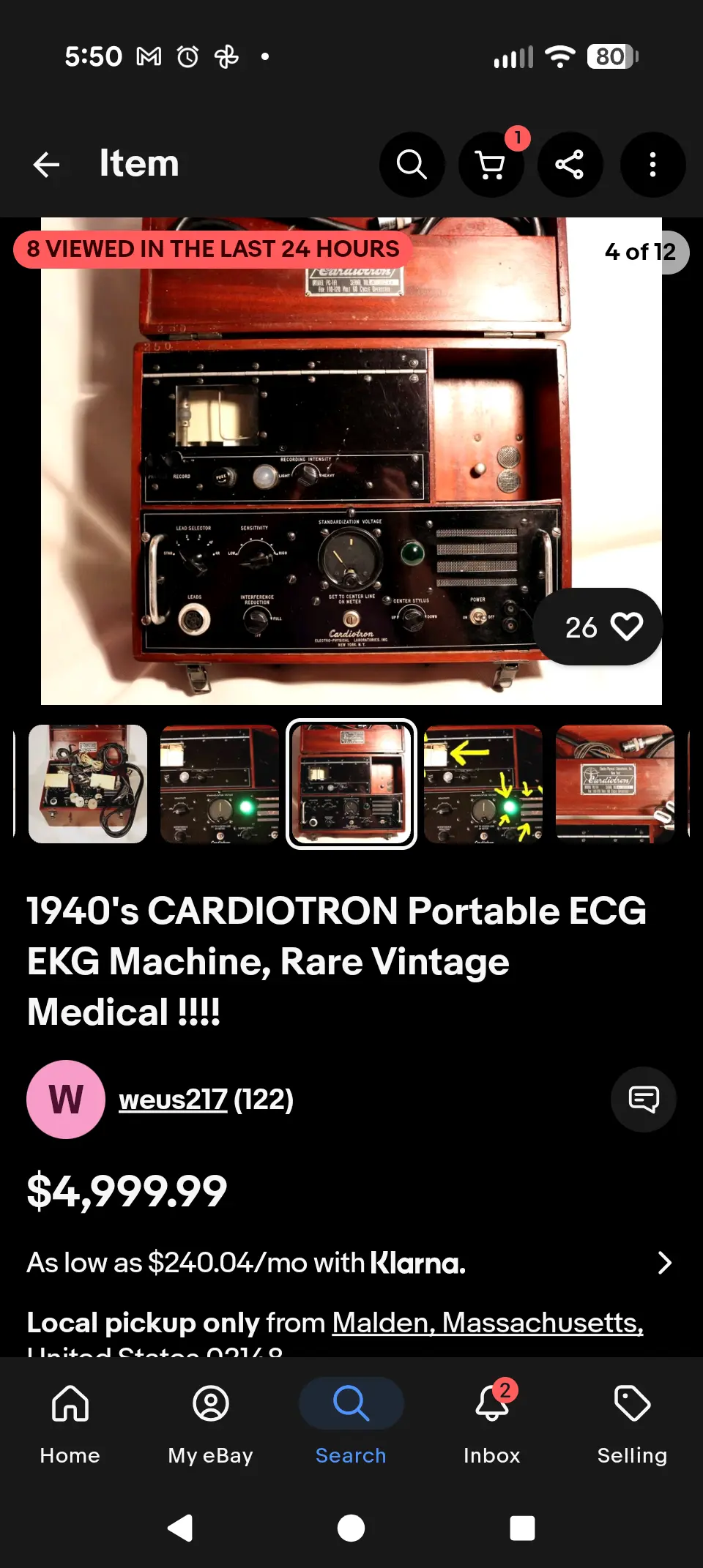
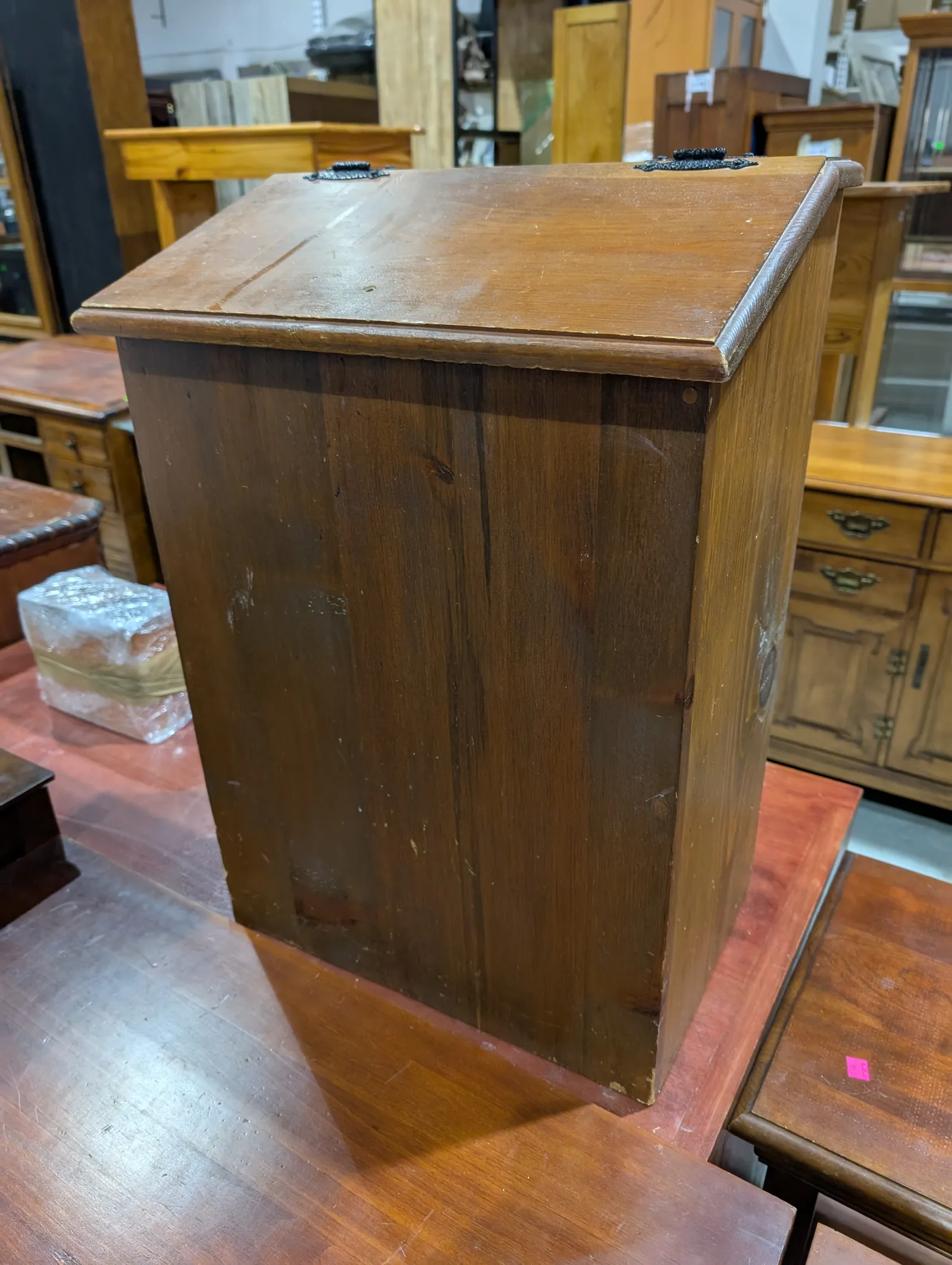
1940s EKG machines were initially paper-fed and needle-marked like a seismograph. Others later used an oscilloscope display which would be both more interesting looking and also more cost effective and reliable to recreate without requiring frequent service. Wooden furniture like a potato storage box had an angled upper portion which could be interesting for a control panel, but a piece of medical equipment like an oscilloscope wasn't the same as a control console. The initial angled display console concept changed to something more like the pictured soviet lab equipment, mixed with the authentic ribbon and paper machine. Highly weathered rust effects would be desired and reference textures were recorded.

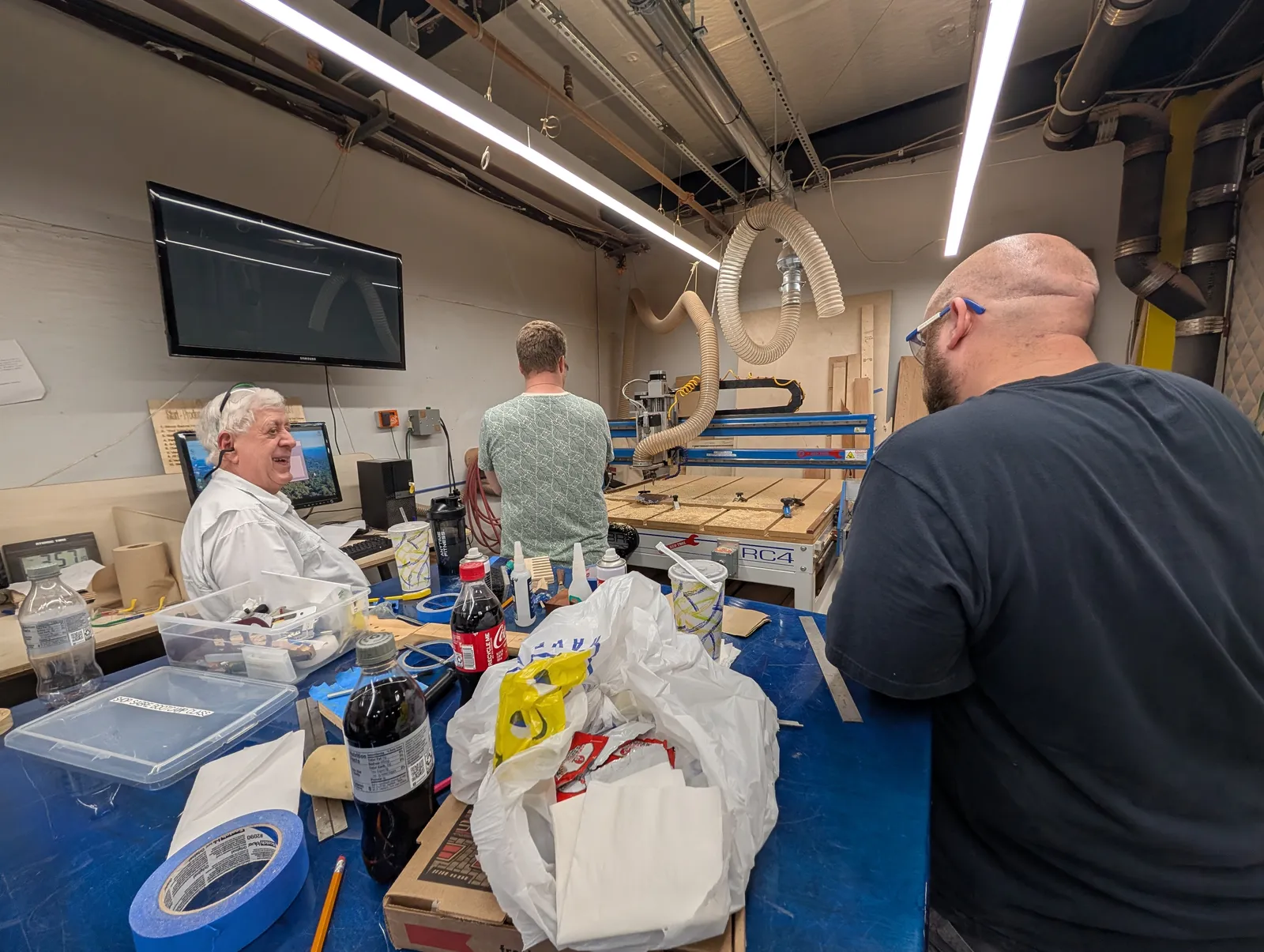
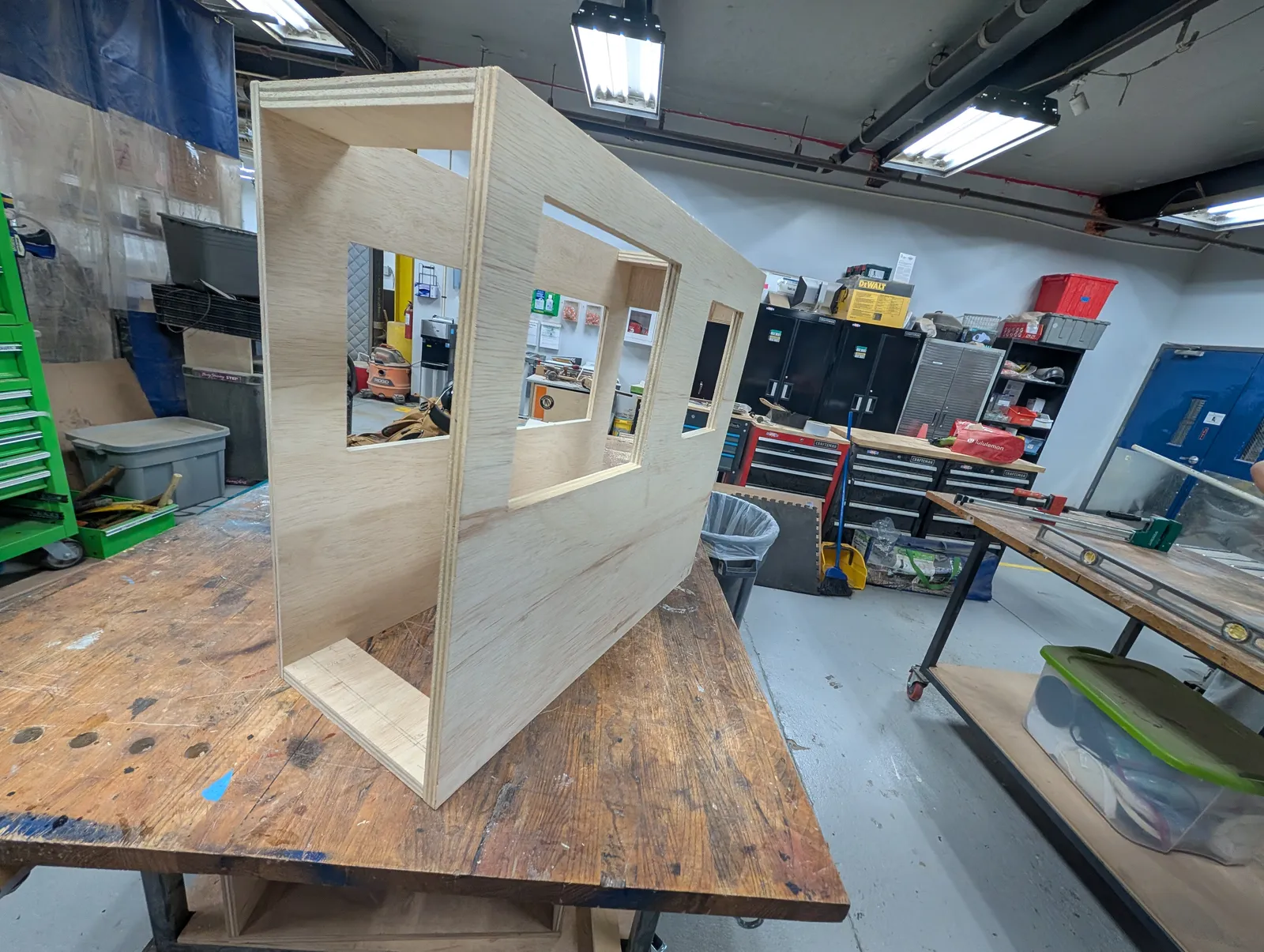
The ShopSabre CNC router machine would be used to create precision cuts for multiple materials and overlays for the face of the device. The acrylic lens, the bezels of the front panel, and the voids on the front and the back would be routed in with this process.

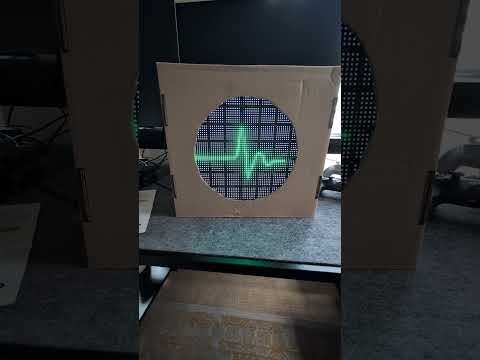
A panel would display the oscilloscope style animation. Multiple animation tests and concepts were used on a 64x64 display originally used in a child's novelty backpack, repurposed for its unusual mix of large size and low resolution. Additional switch and dial greebling was achived by including an unusual piece of vintage photography darkroom equipment. It contained very unfamiliar looking dials, markings, and meters and atmospheric lighting that looked great in darker areas.

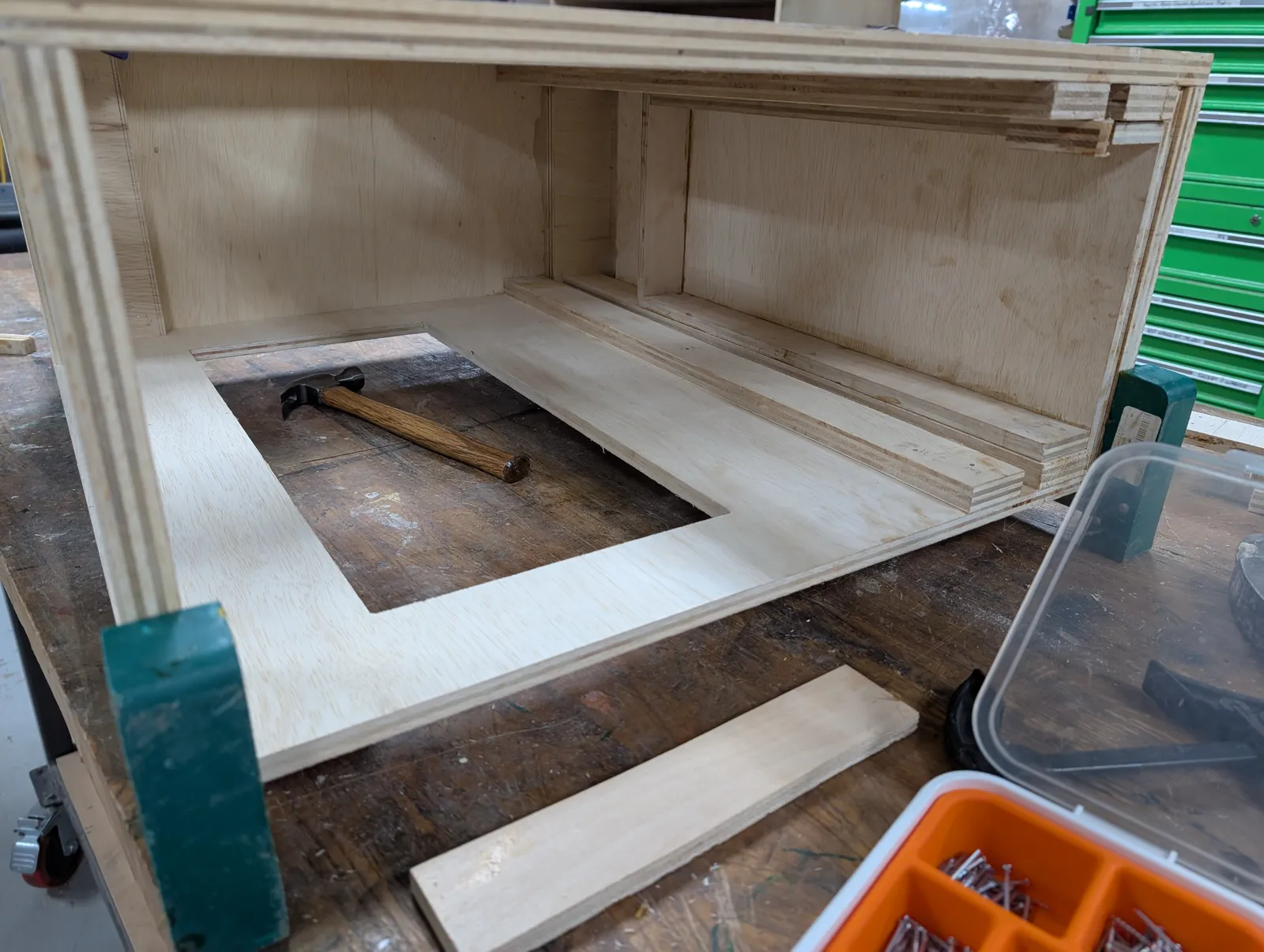
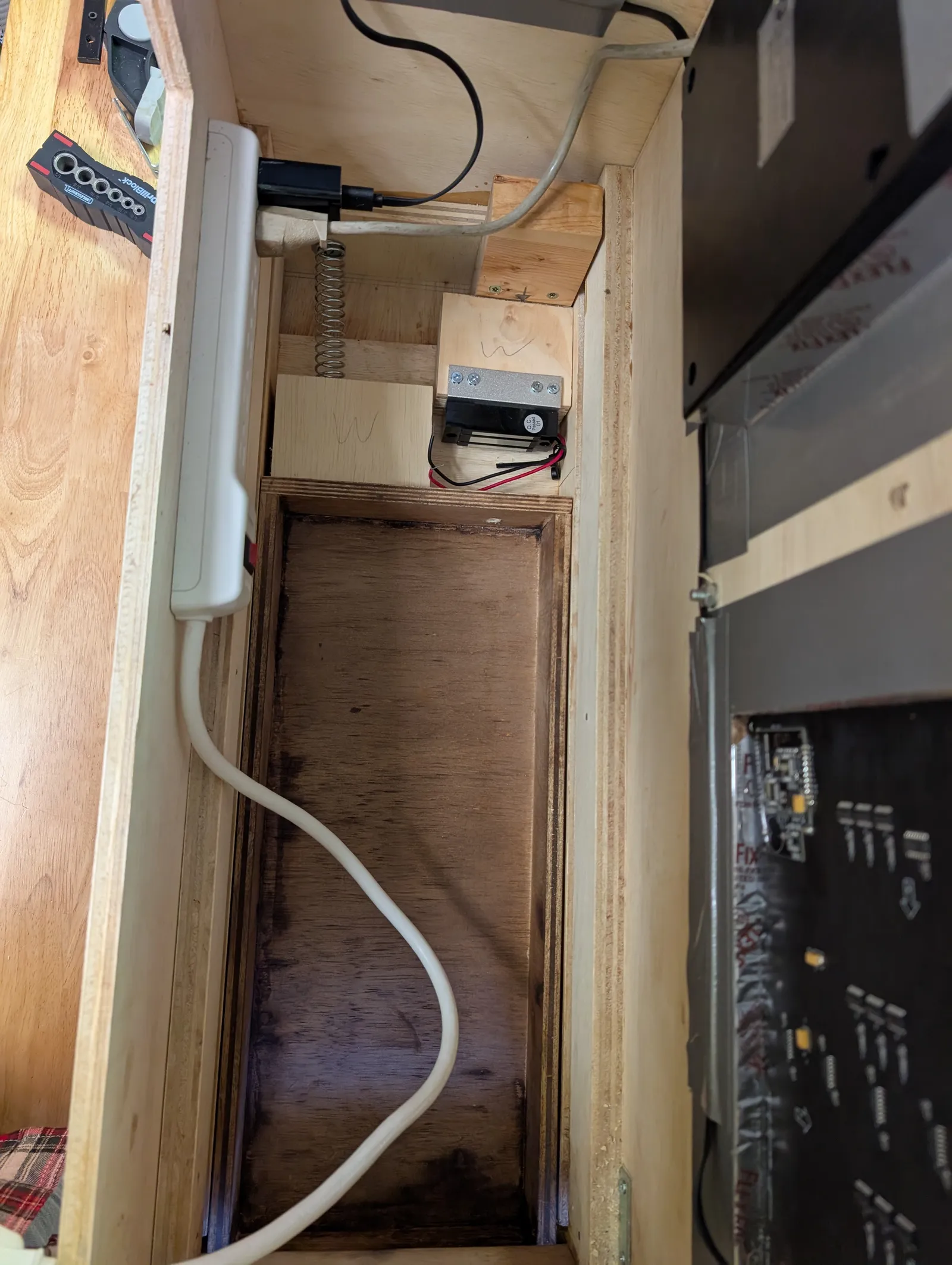
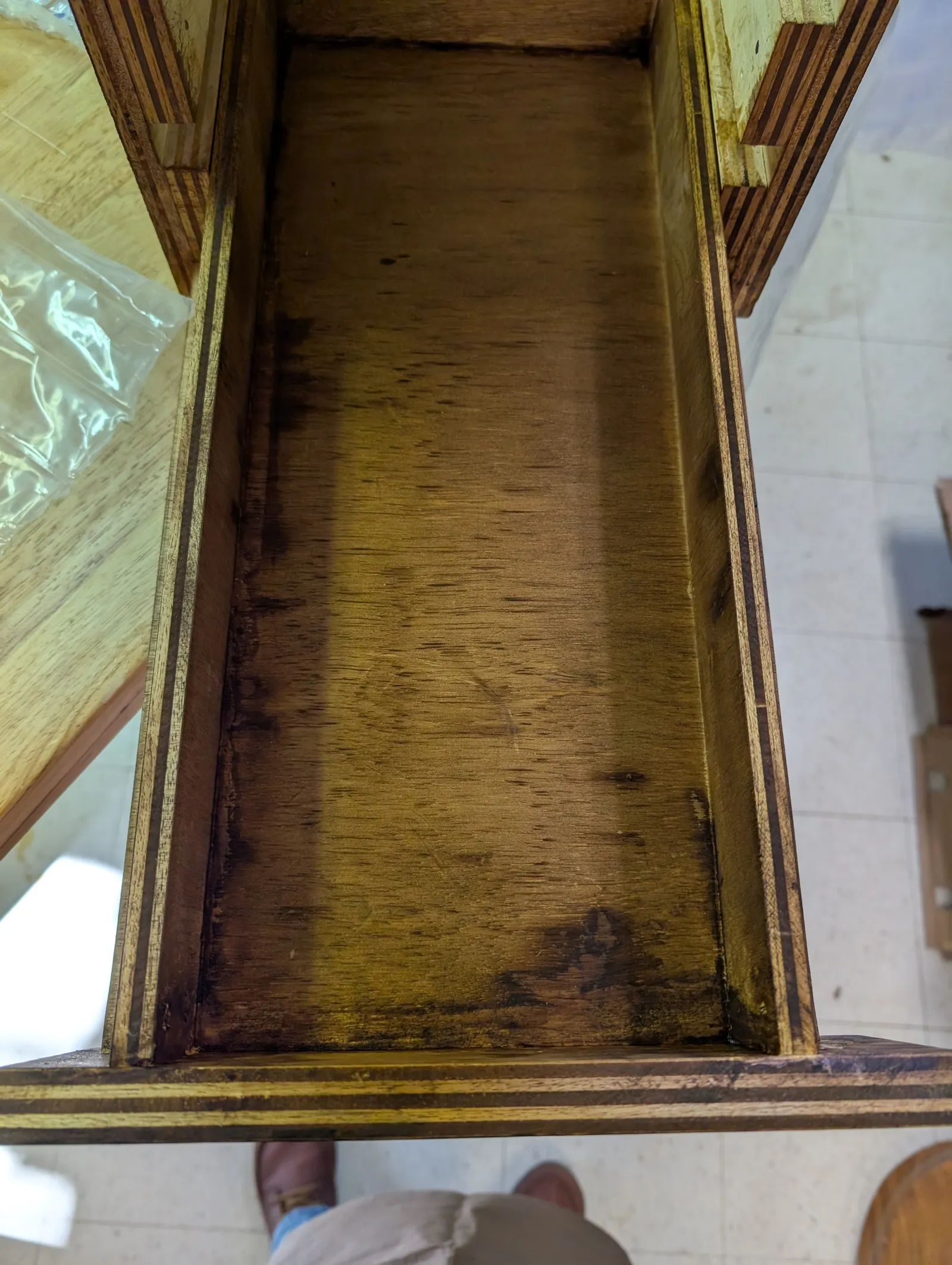
The interior dimensions of the drawer were the most imporant part of the build, due to the size of the pre-existing object that needed to be stored inside. It dictated many of the prop's final dimensions. A period appropriate, maintenance-free, highly durable slideless drawer design was implemented. It needed to have no vertical or horizontal play, as well as inability to be fully removed or extended to prevent tampering by escape gamers. The magnetic lock's connection plate needed to remain inaccessible and have a mountable surface for adjustable positioning of the spring-loaded addition.

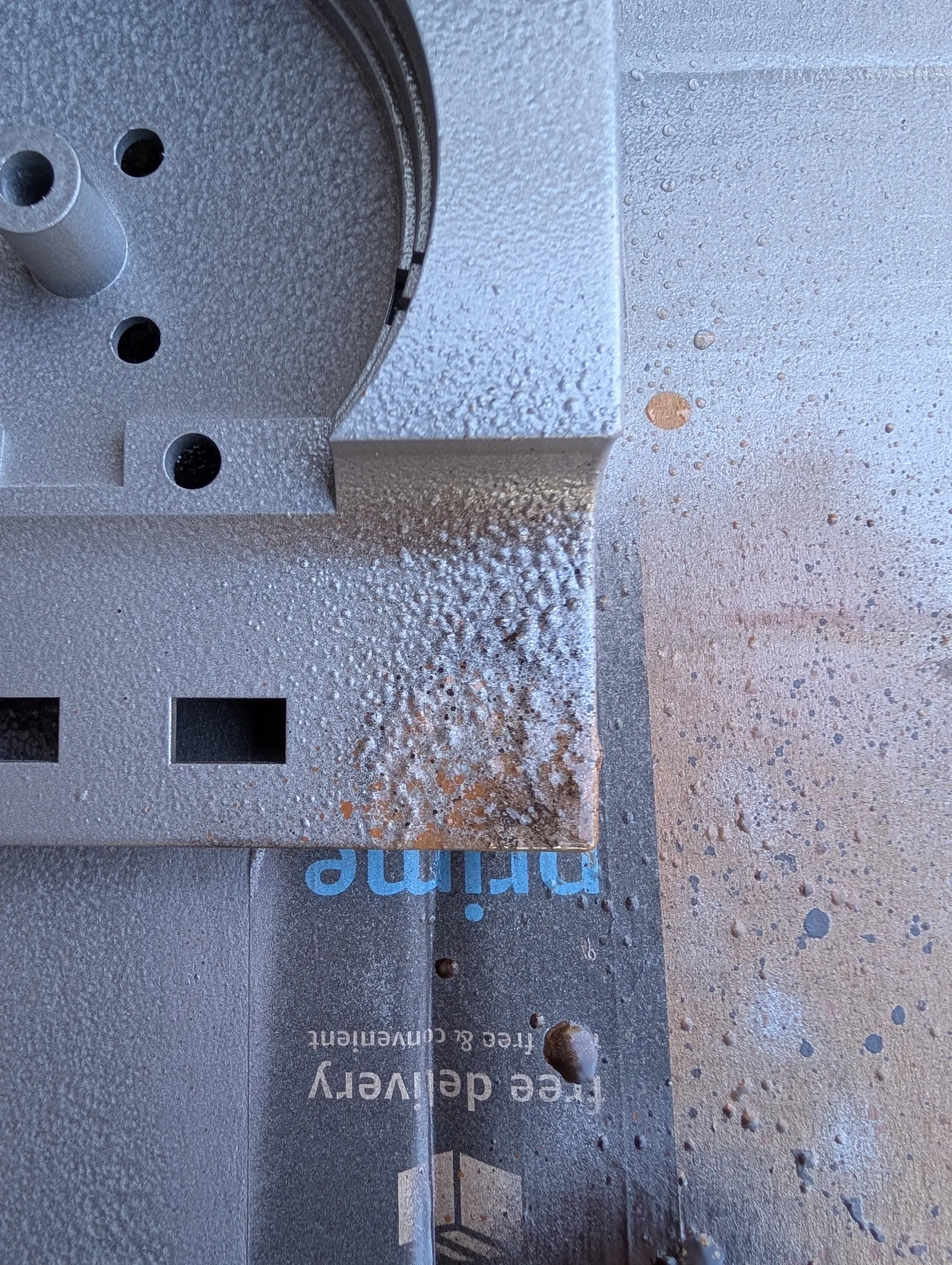
The prop was given a rust and water-damaged appearance. Spraypaint over beaded water was able to provide realistic rust paint bubbling on display elements. Wood stain and stain correction markers of incorrect colors were used to simulate water damage stains.