01
References
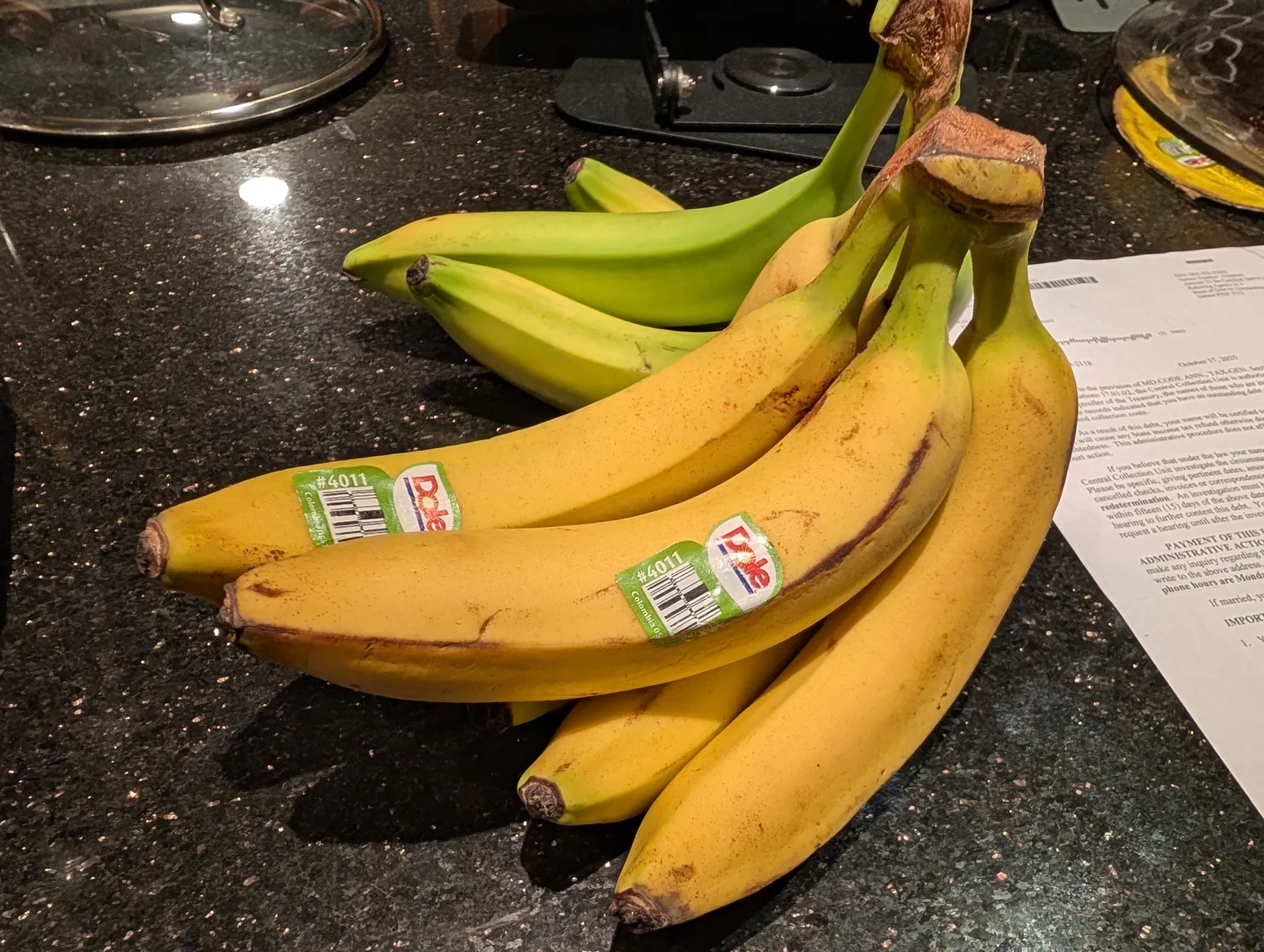
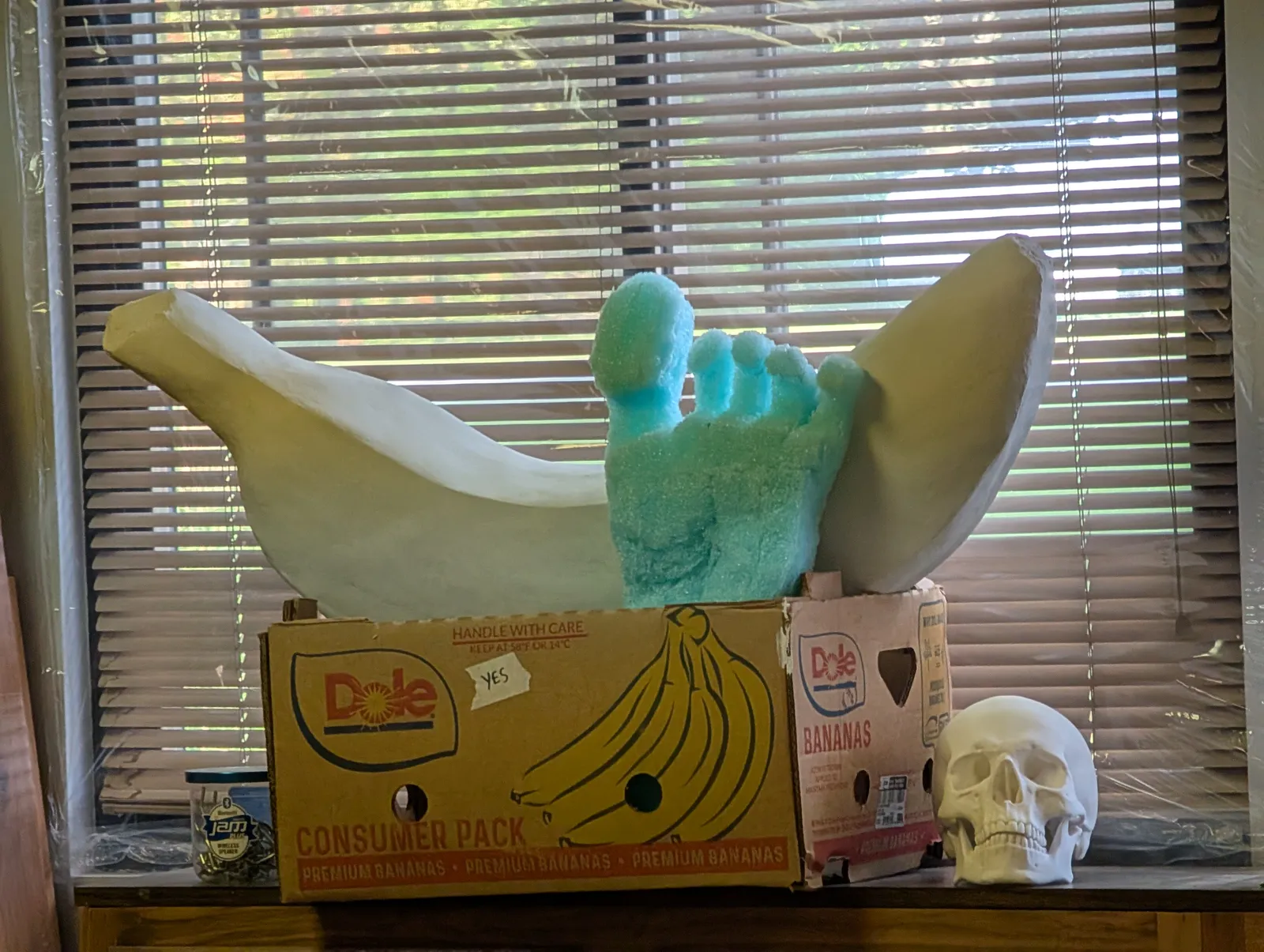
Bananas in various ripening stages. Eventually one would be taken to a local home center for paint color matching.
An exploration of scale and low-cost material.
I've always been delighted by small versions of big things or big versions of small things. I was interested in creating a larger-than-convenient build of something mundane at extremely low cost. After a bit of research, cardboard seemed like the perfect route to make my dreams come true. A banana is a universally renowned measurement of scale, so why not complicate things? This is currently an uncomissioned work in progress.
Bananas in various ripening stages. Eventually one would be taken to a local home center for paint color matching.
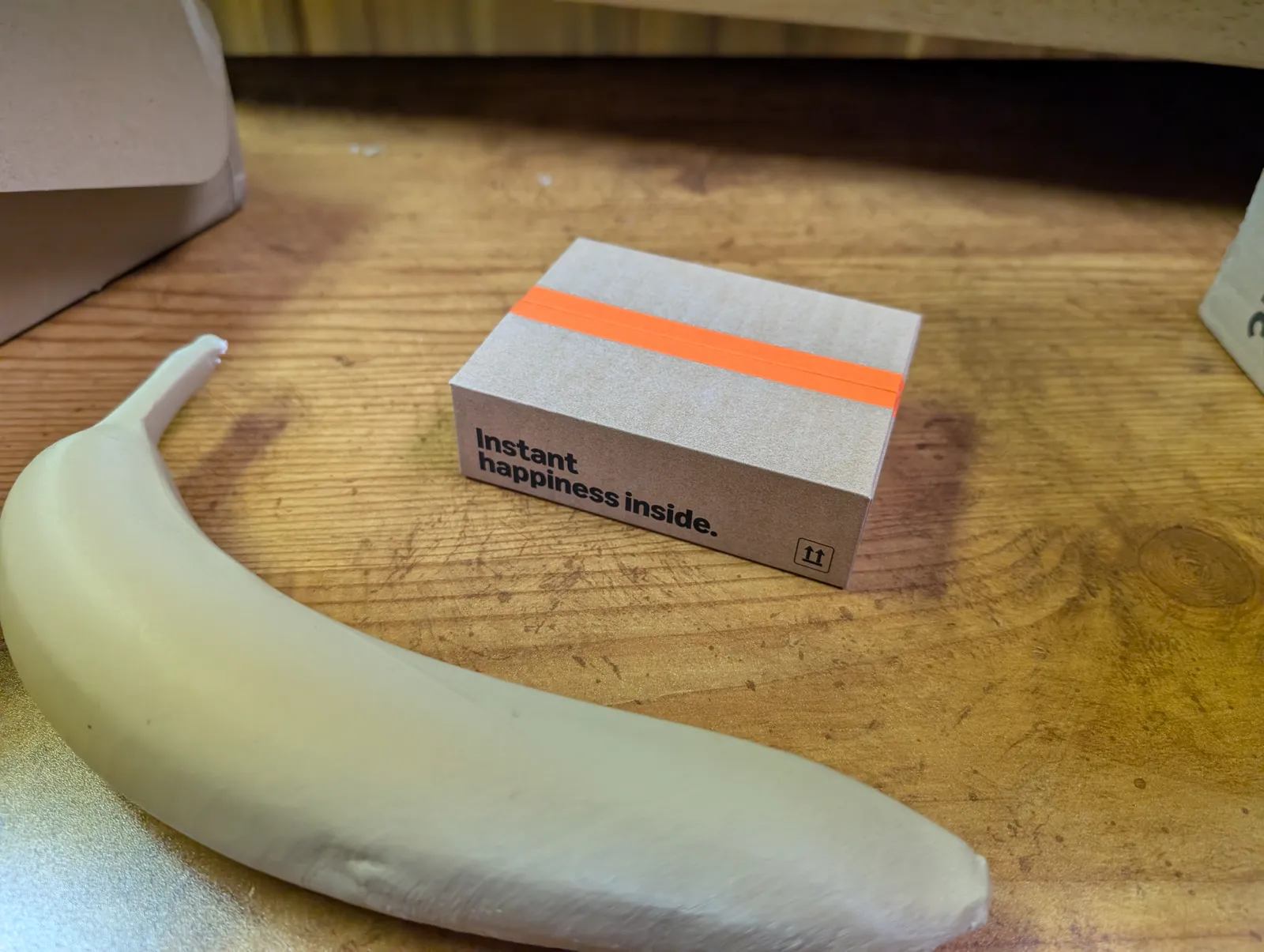
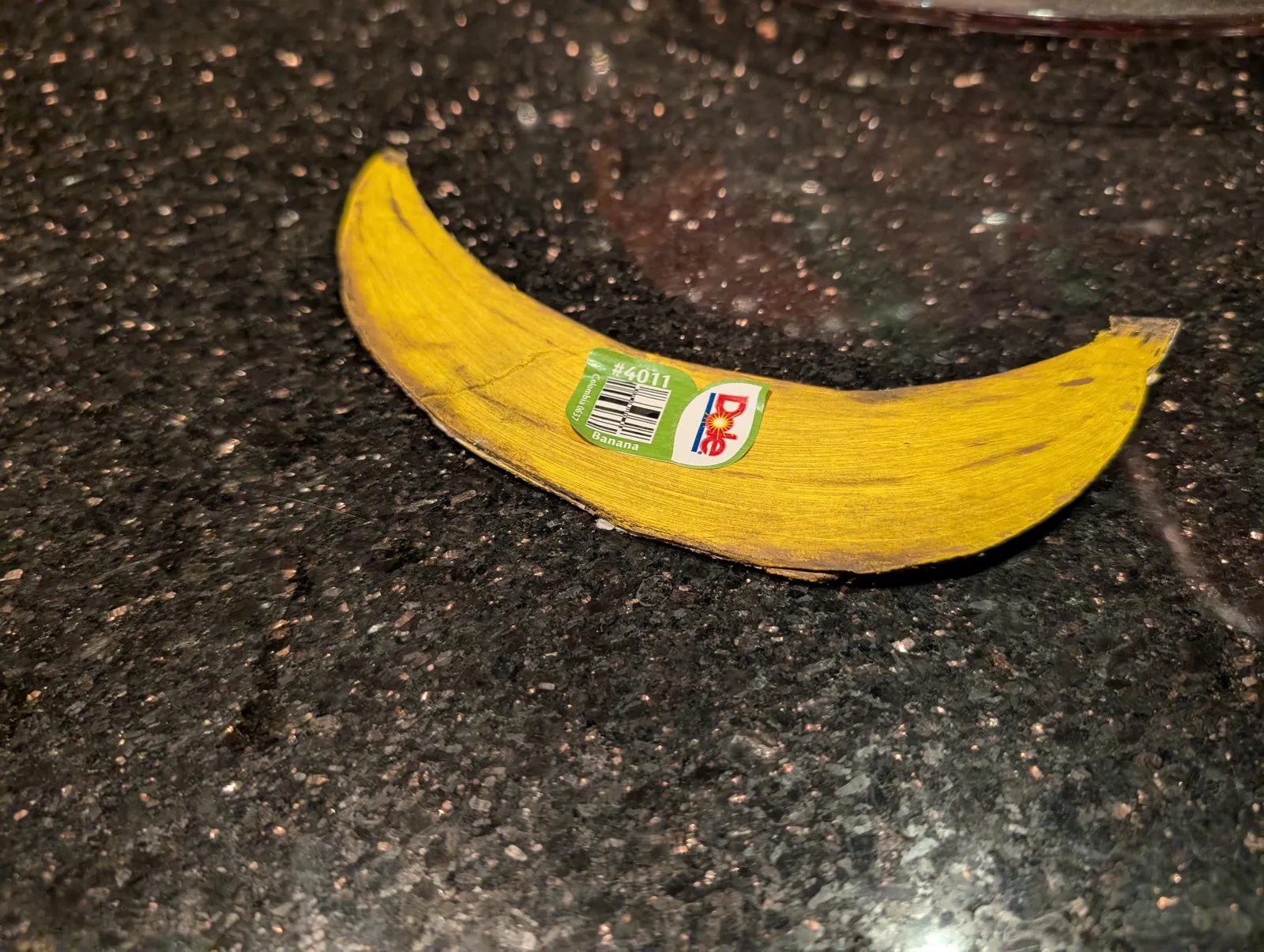
A single peel slice was produced in cardboard and acrylic paints from memory for color, size, and shape. Sticker was borrowed from lunch.
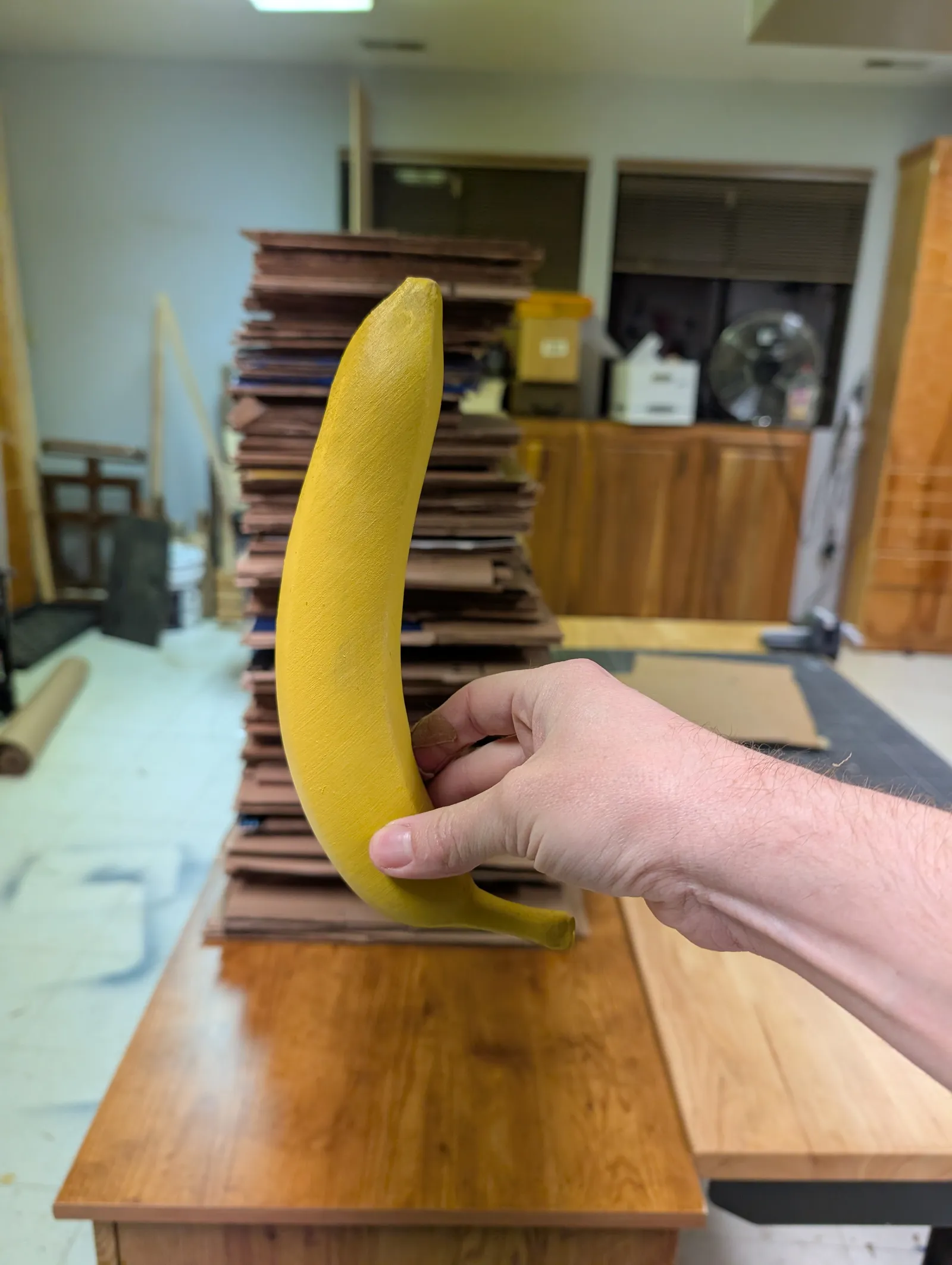
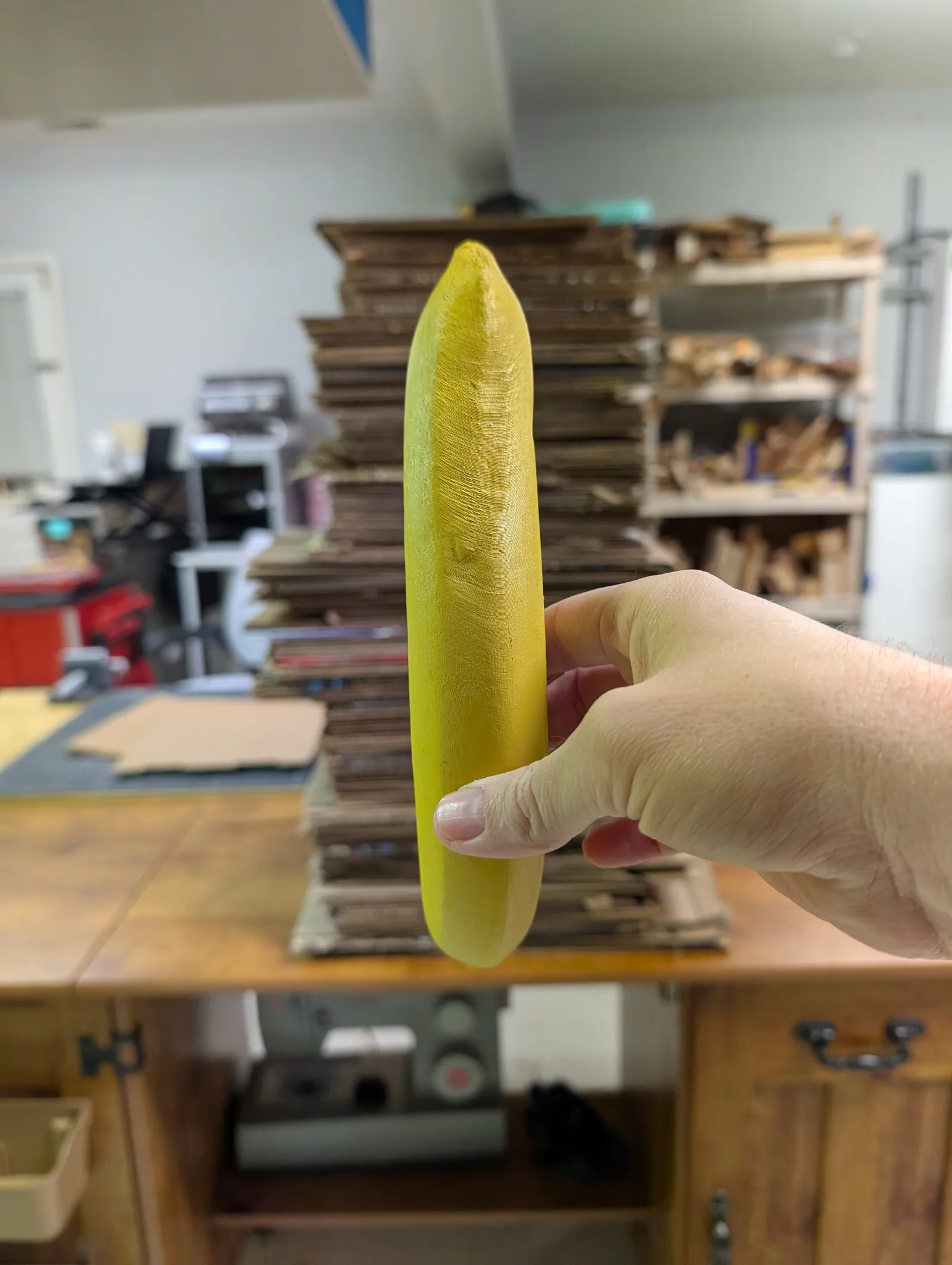
A durable, perpetual, realistic 3D print banana was produced. The color matched paint from the real banana was used to surprising success.
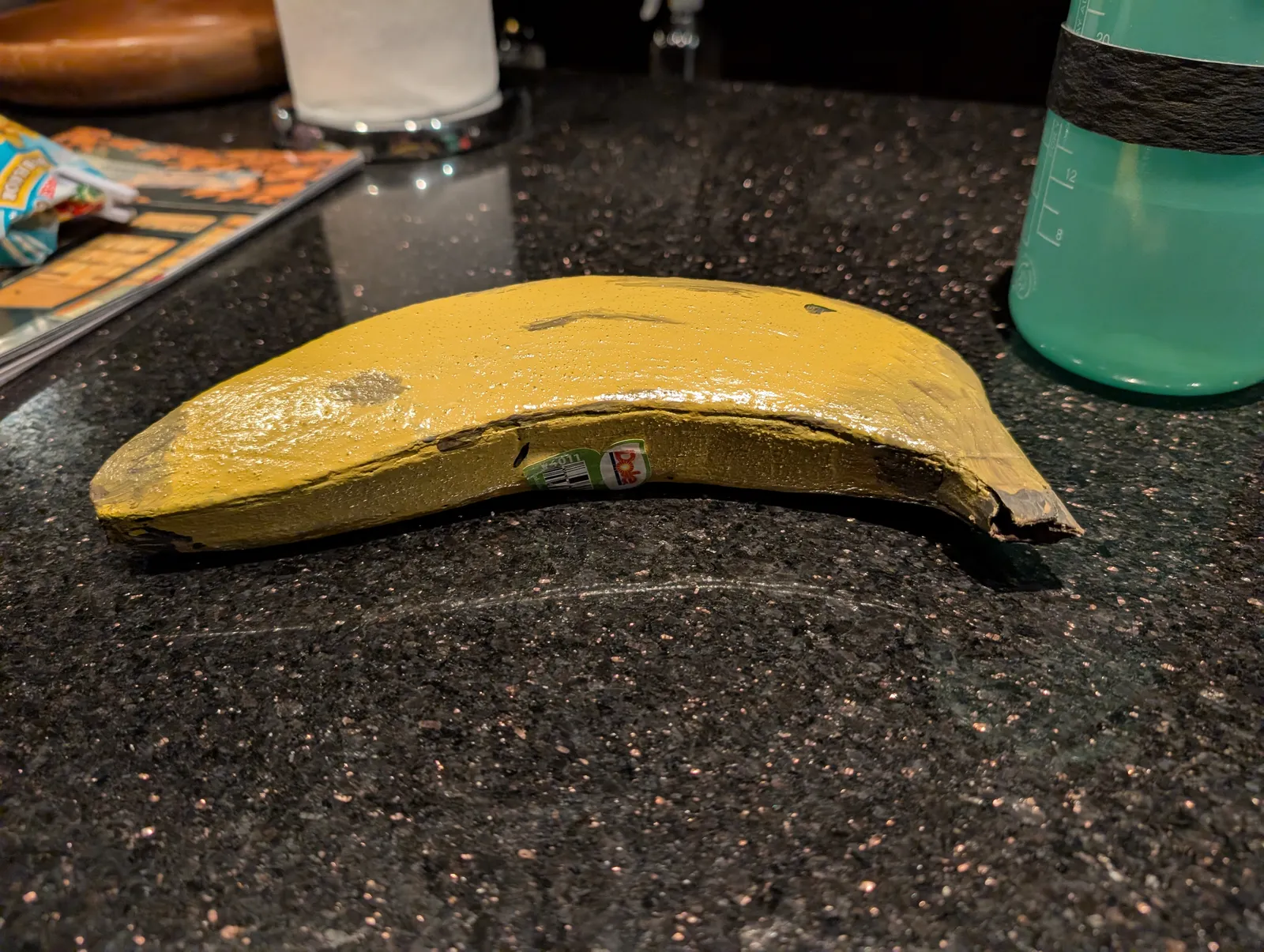
A cosplay technique of wrapping a body part in cling film and then duct tape, and drawing the contours of an object onto the tape could be applied to the banana to produce a papercraft model. The tape was removed, cut, and affixed to cardboard to transfer the pattern. The shape was cut with a number of tabs which would allow it to be glued to its neighboring pieces. An experimental waterproof coating of melted beeswax and shellac was prepared and applied to the surface of the cardboard and allowed to dry before painting. Unfortunately the beeswax did not emulsify in the alcohol when cooling so it gives the banana a very bumpy appearance, and the acrylic paint and shellac give it a very glossy, un-banana finish. Detail testing was lazily applied for brown ripening coloring. Another approach would be necessary.
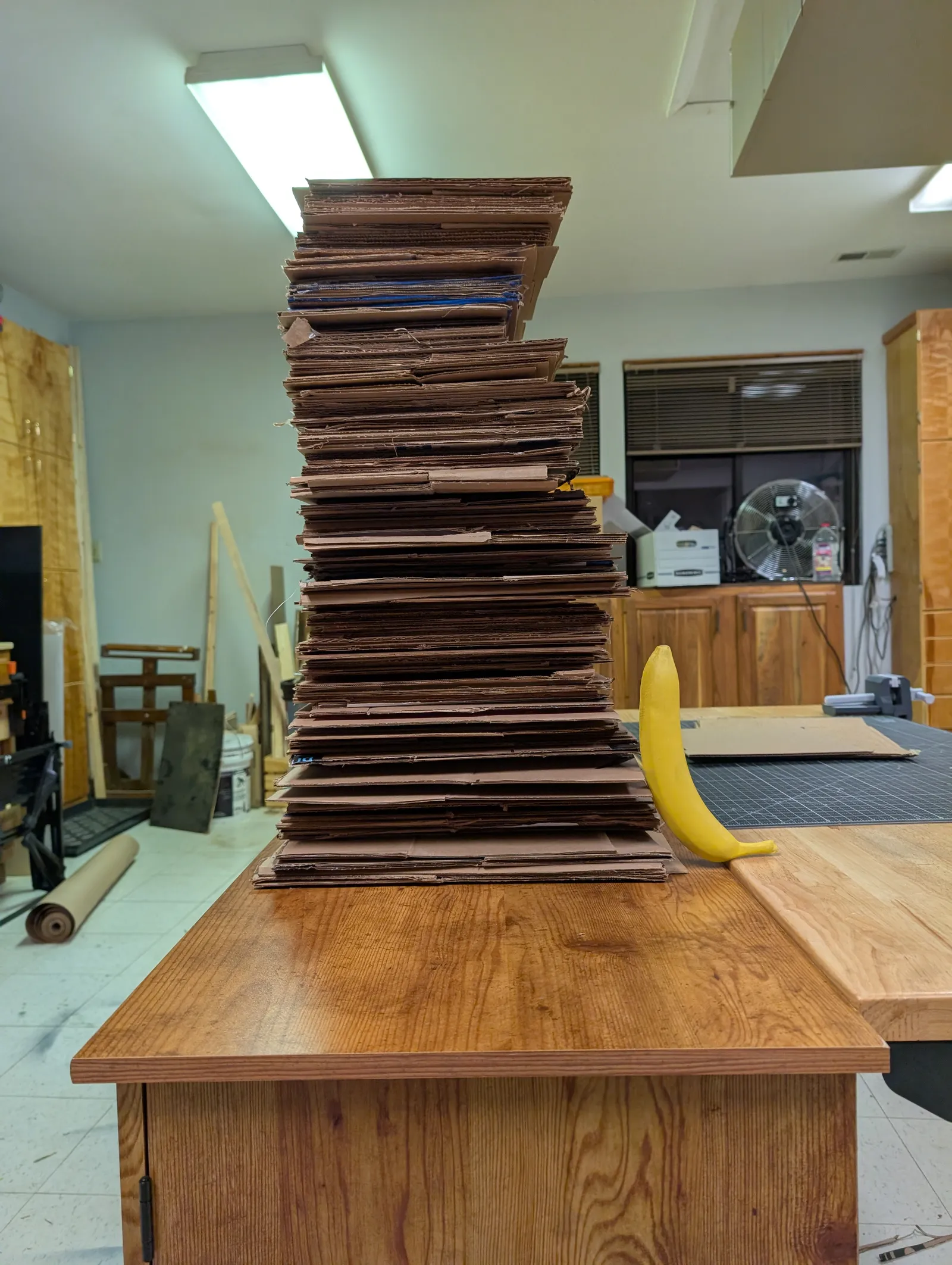
With a little math help from an AI chatbot, 170 roughly 10x10 inch cardboard panels were cut from whole boxes and stacked in order for relatively similar dimensions. The resulting stack was under 3 feet tall, but appeared to be rather heavy and very dense. This could not be carved as is. Another approach would be necessary.
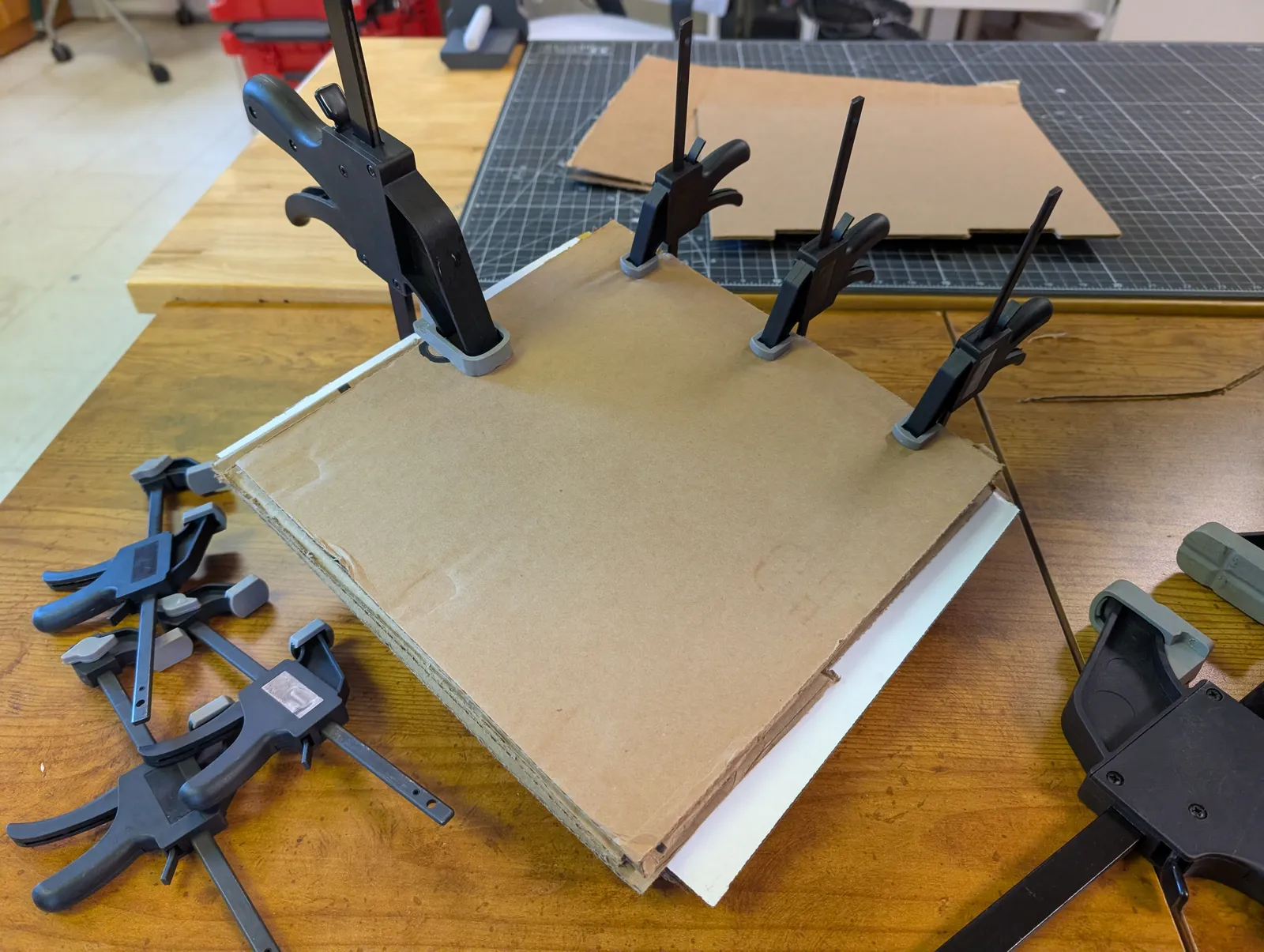
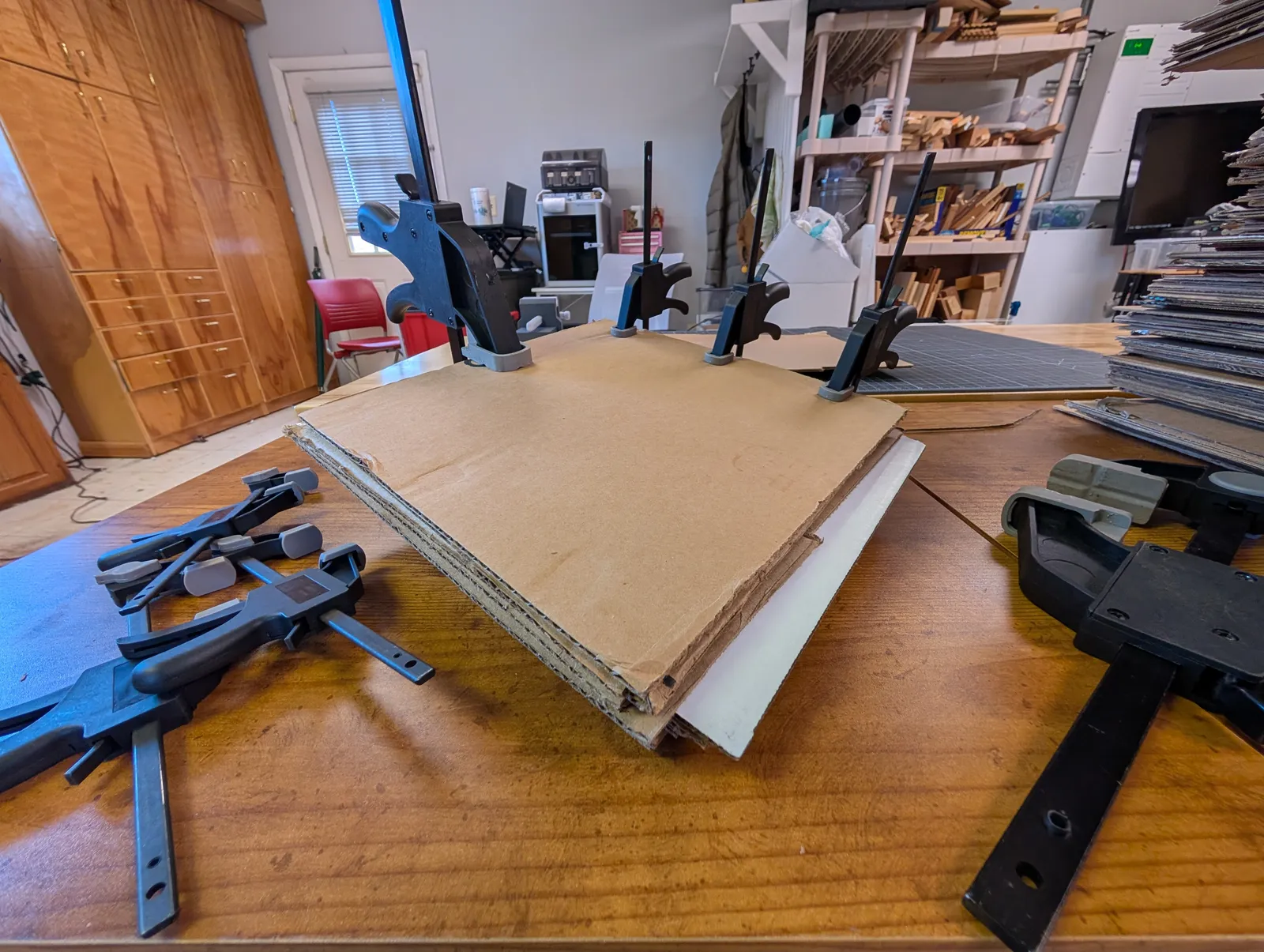
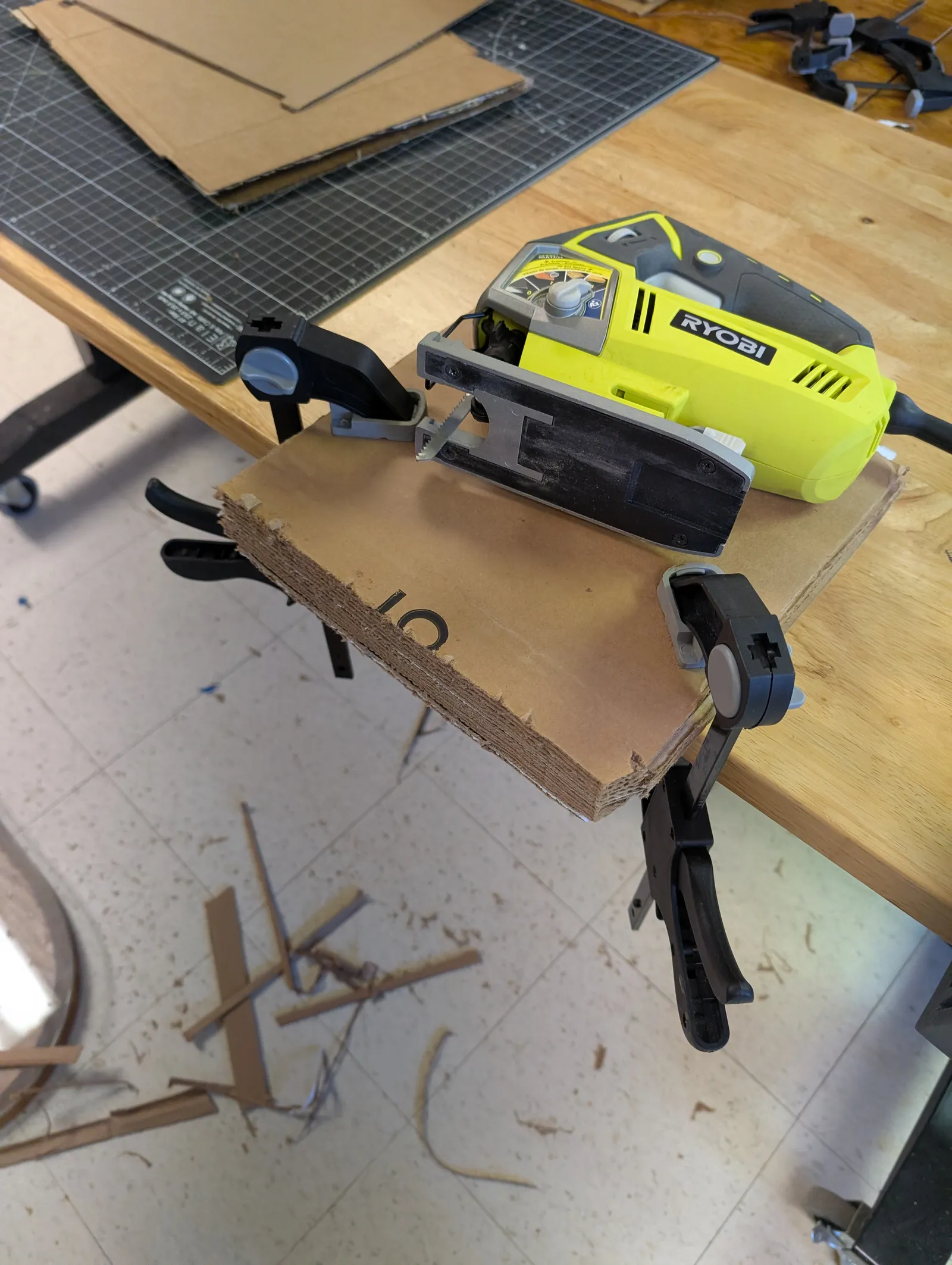
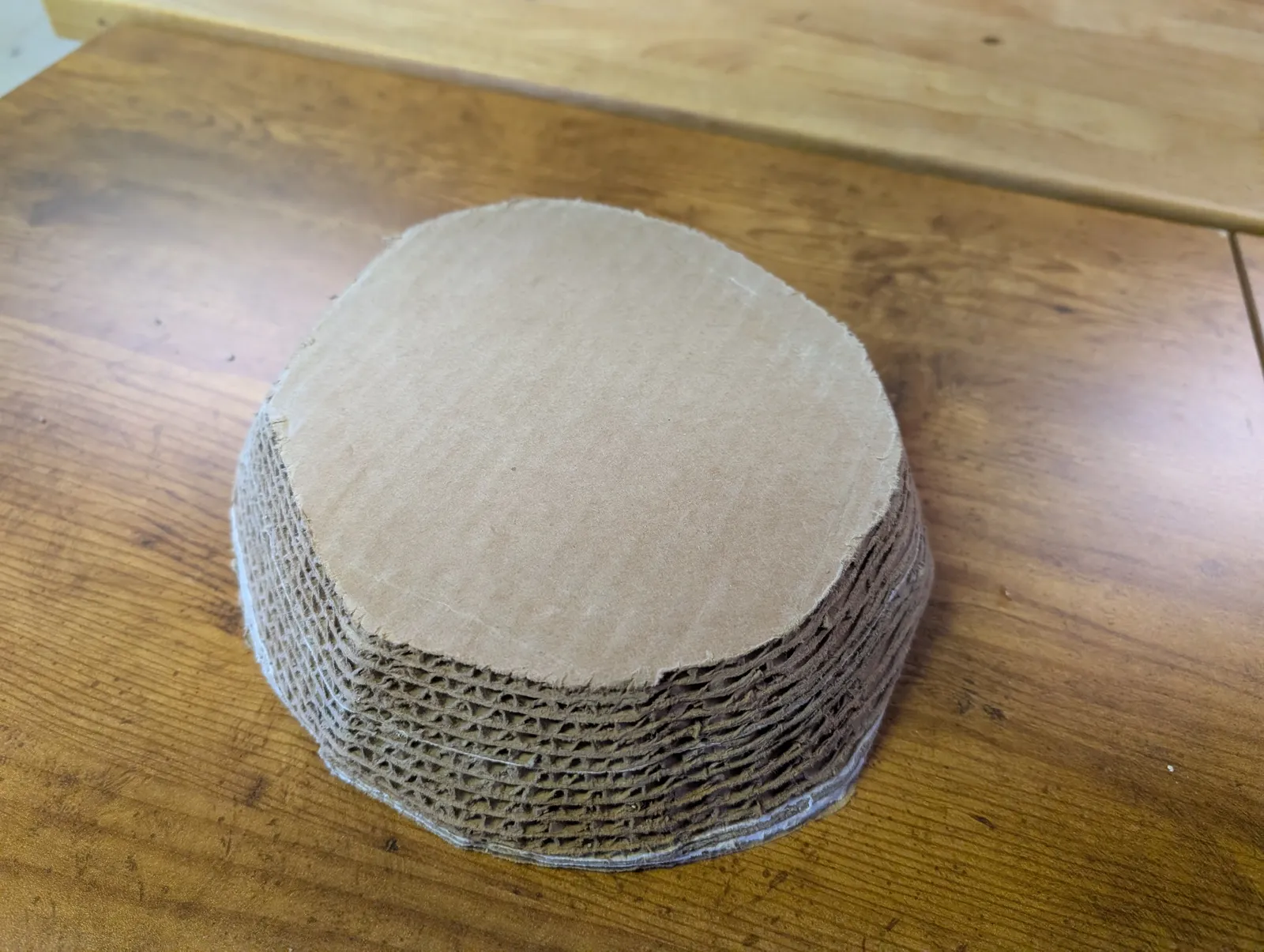
Cutting a 3 foot loose cardboard sculpture is not easily achievable, so we attempted to approach doing it in sections. A jigsaw blade's length was used to determine the maximum size of a stack that could be cut with that tool safely. Panels were glued together with wood glue and clamped overnight. The resulting panel was very rigid and very strong, like very lightweight wood. The jigsaw did not fair easily and multiple blades were consumed in just this minor attempt at tapering the tip. Most jigsaw cuts are on 3/4 inch material or thinner. Not material the entire length of the blade. Thinner slices could be assembled, but carving consistency between thin layers would present a challenge. Another approach would be necessary.
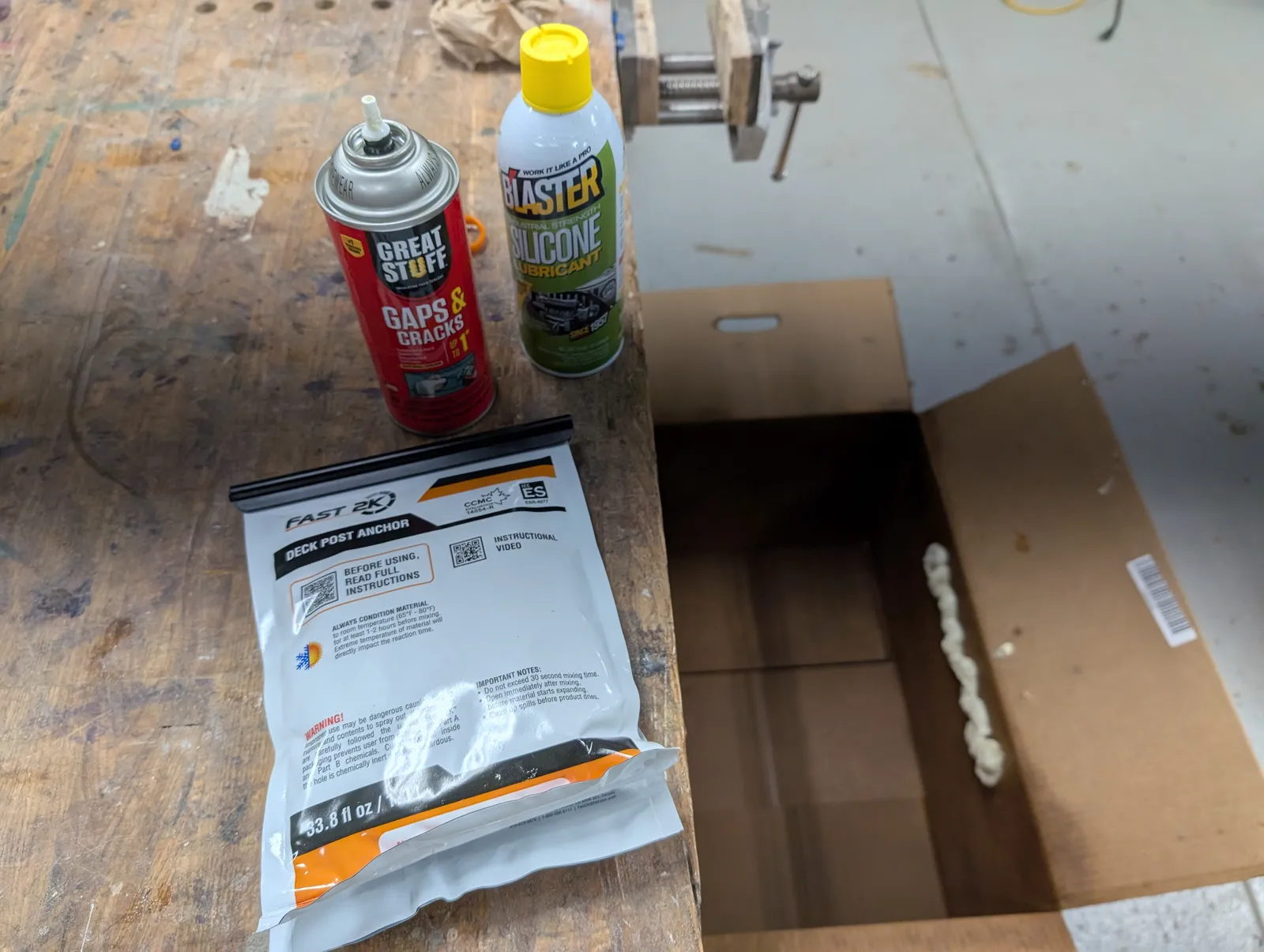
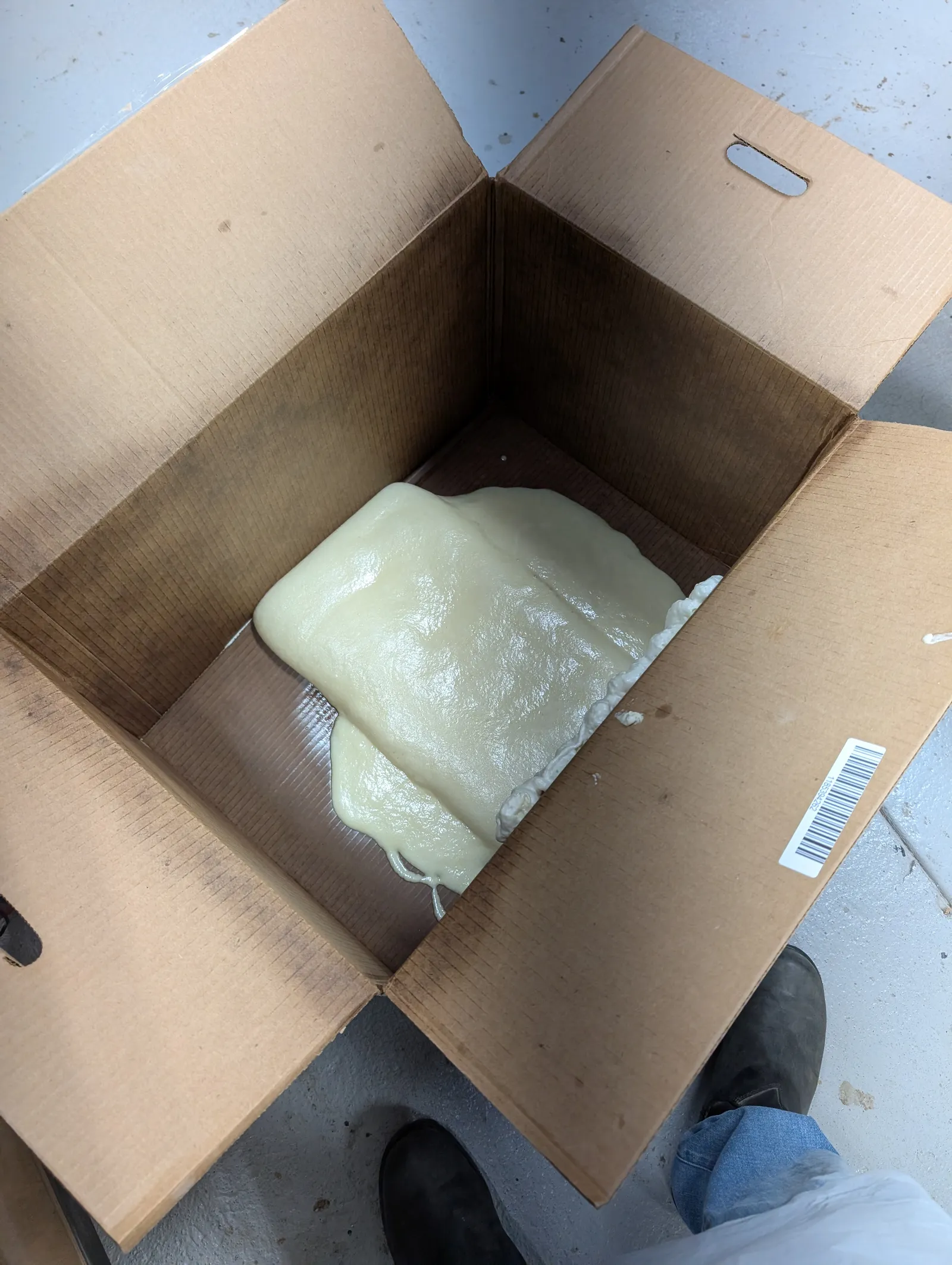
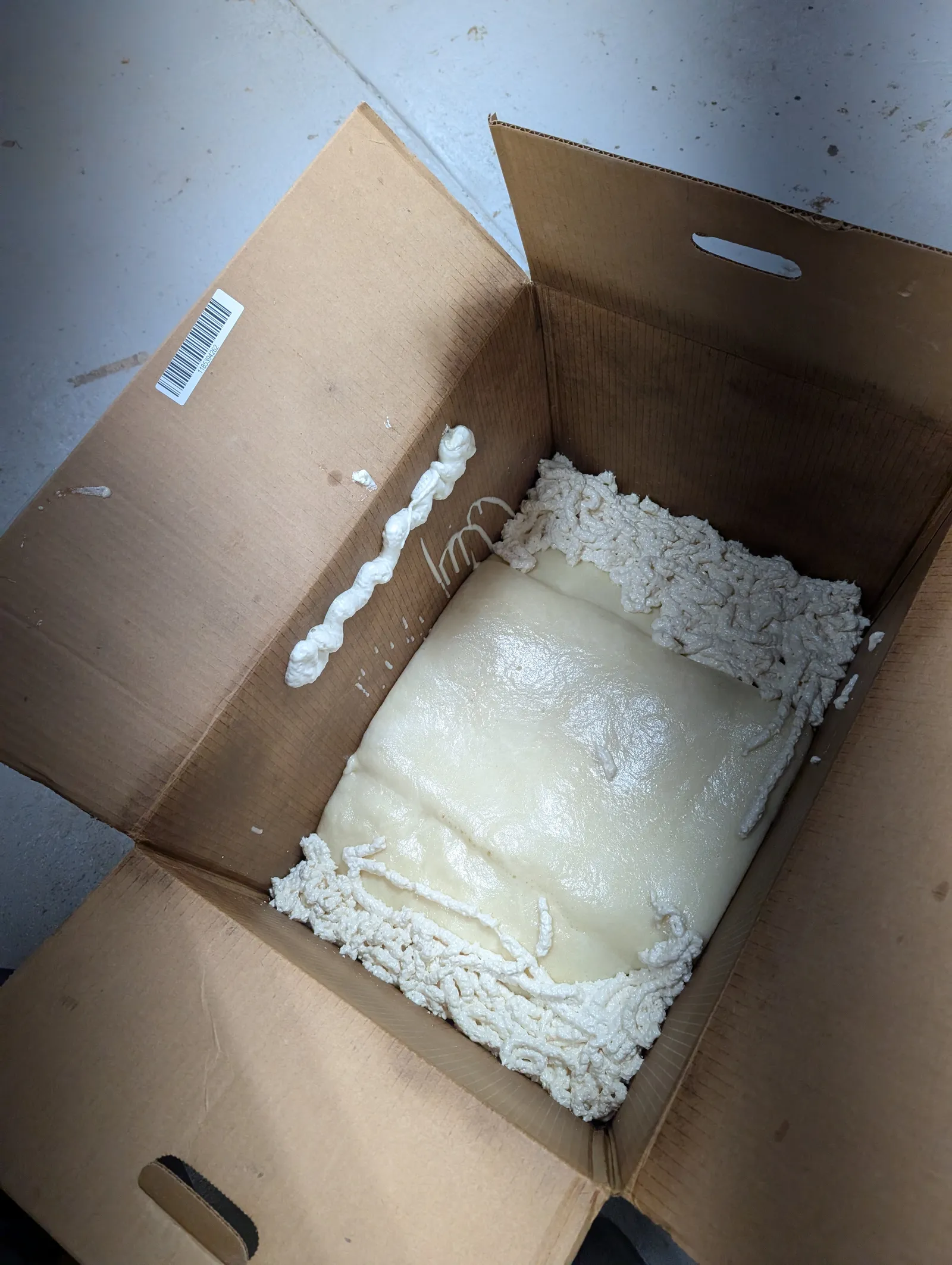
A product at the local home center advertised creating an expanding foam to fill a deck post hole and replaced 2 50LB bags of concrete. We expected this would generate a significant volume of foam that could be carved. The largest box available was coated with silicone lubricant to act as a mold release and the two-part foam reagents were mixed and poured inside. We had not accounted for the interior flaps of the box, and the foam reagents settled beneath two panels which prevented them from expanding fully. The central area was not suficient for carving, and a can of expanding foam was tested to determine it's maximum volume to attempt to save the experimentation. It was much less dense and did not yield consistent material or enough volume to provide a carving substrate. Another approach would be necessary.
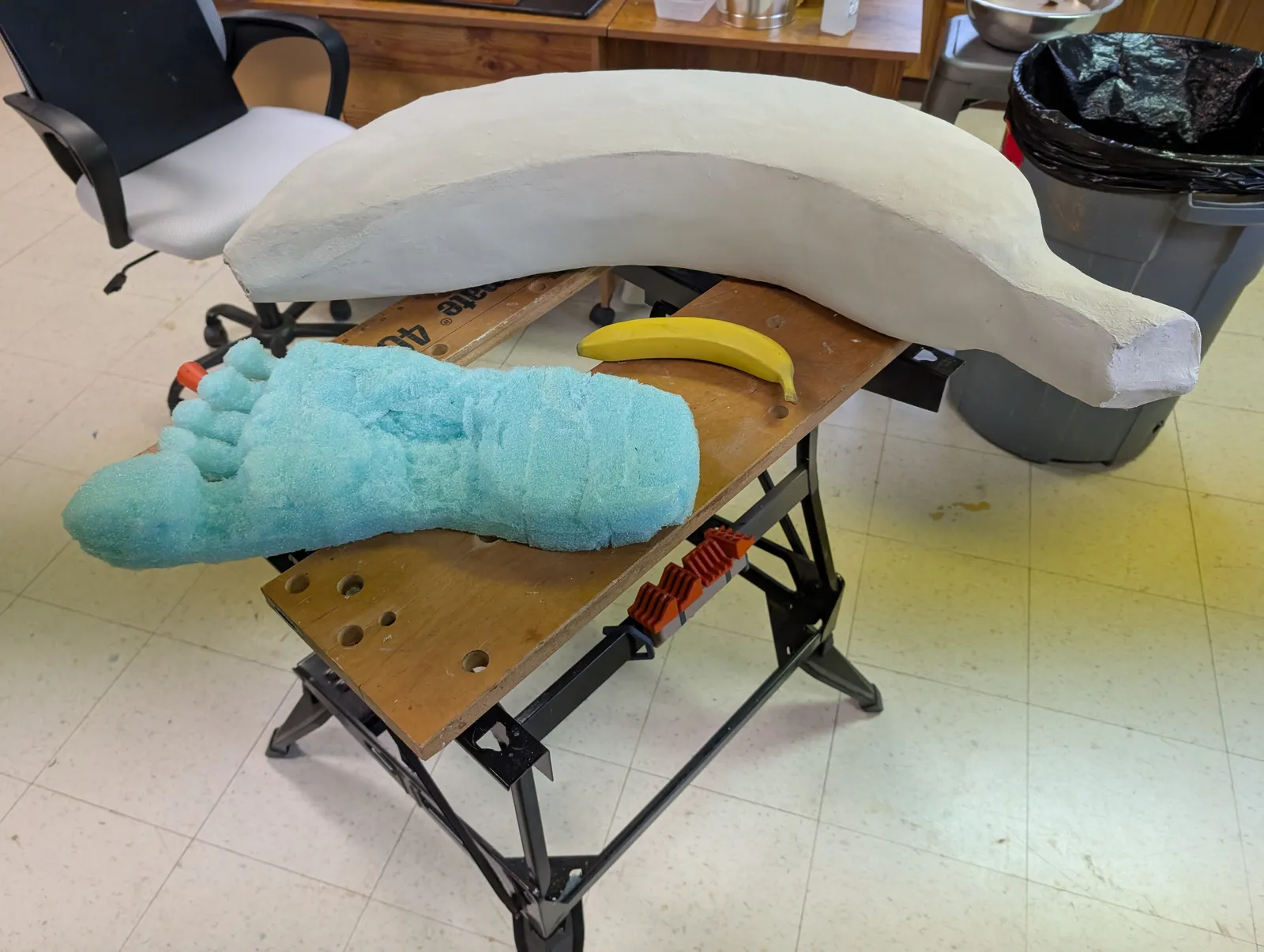
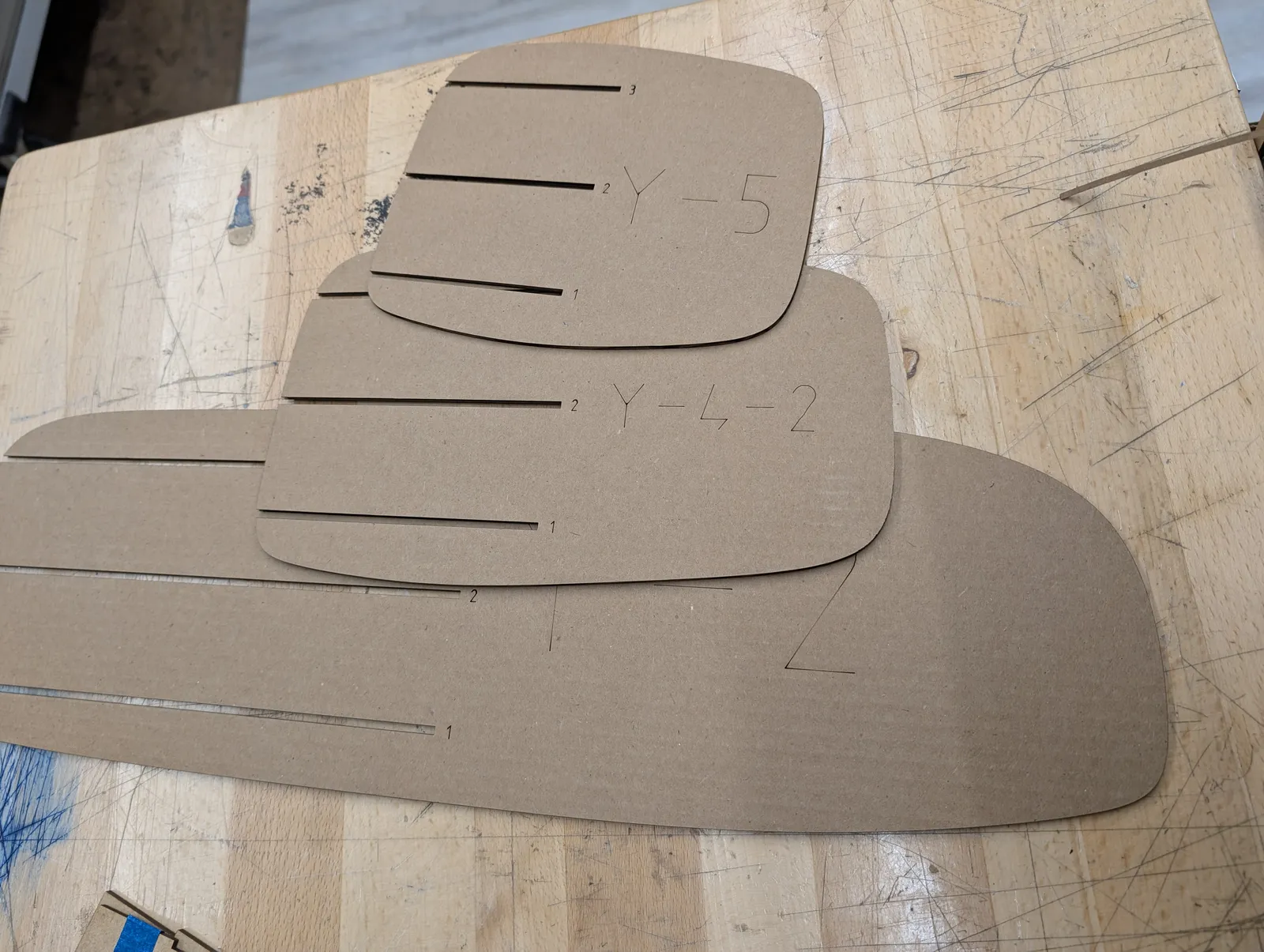
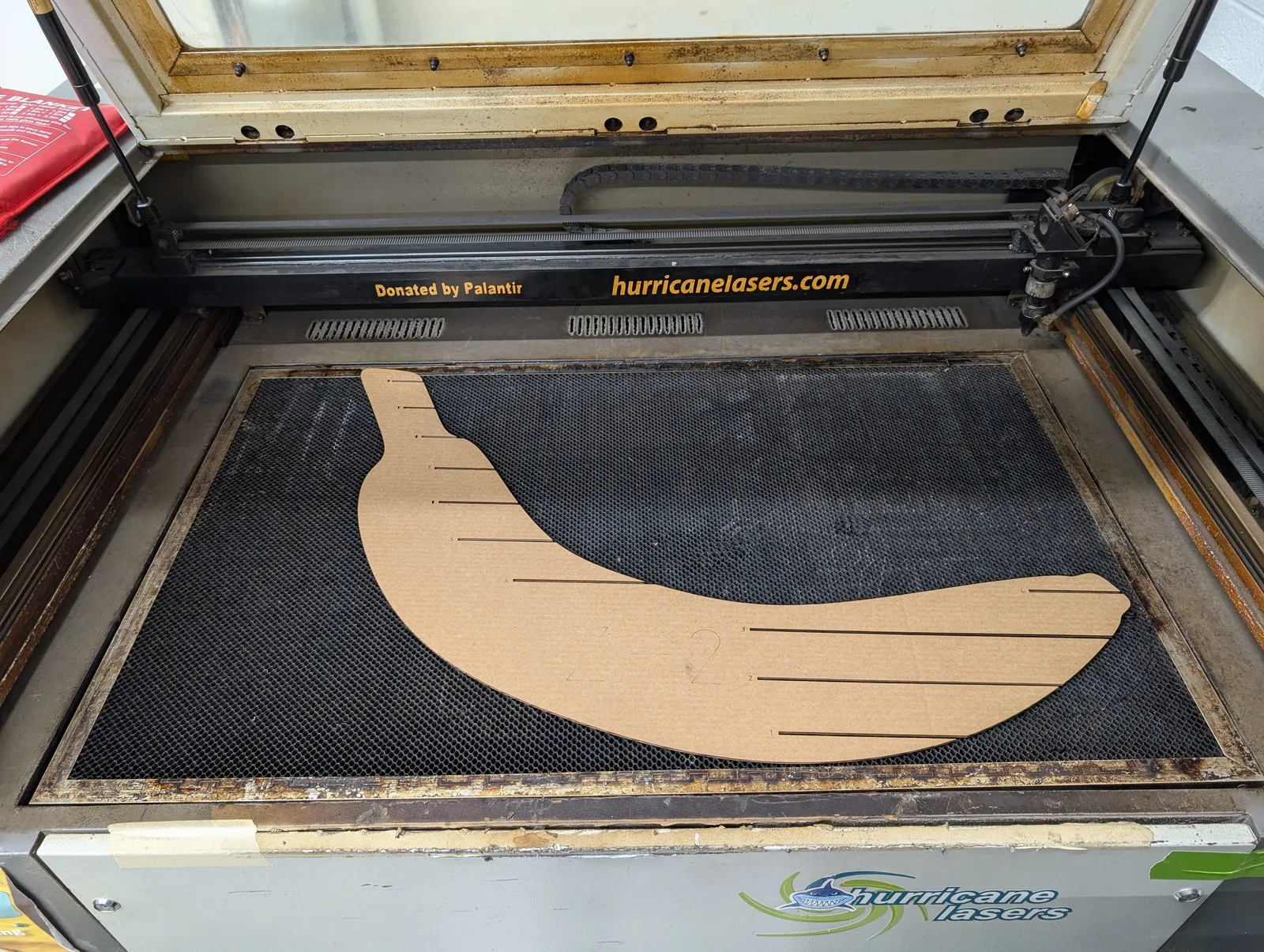
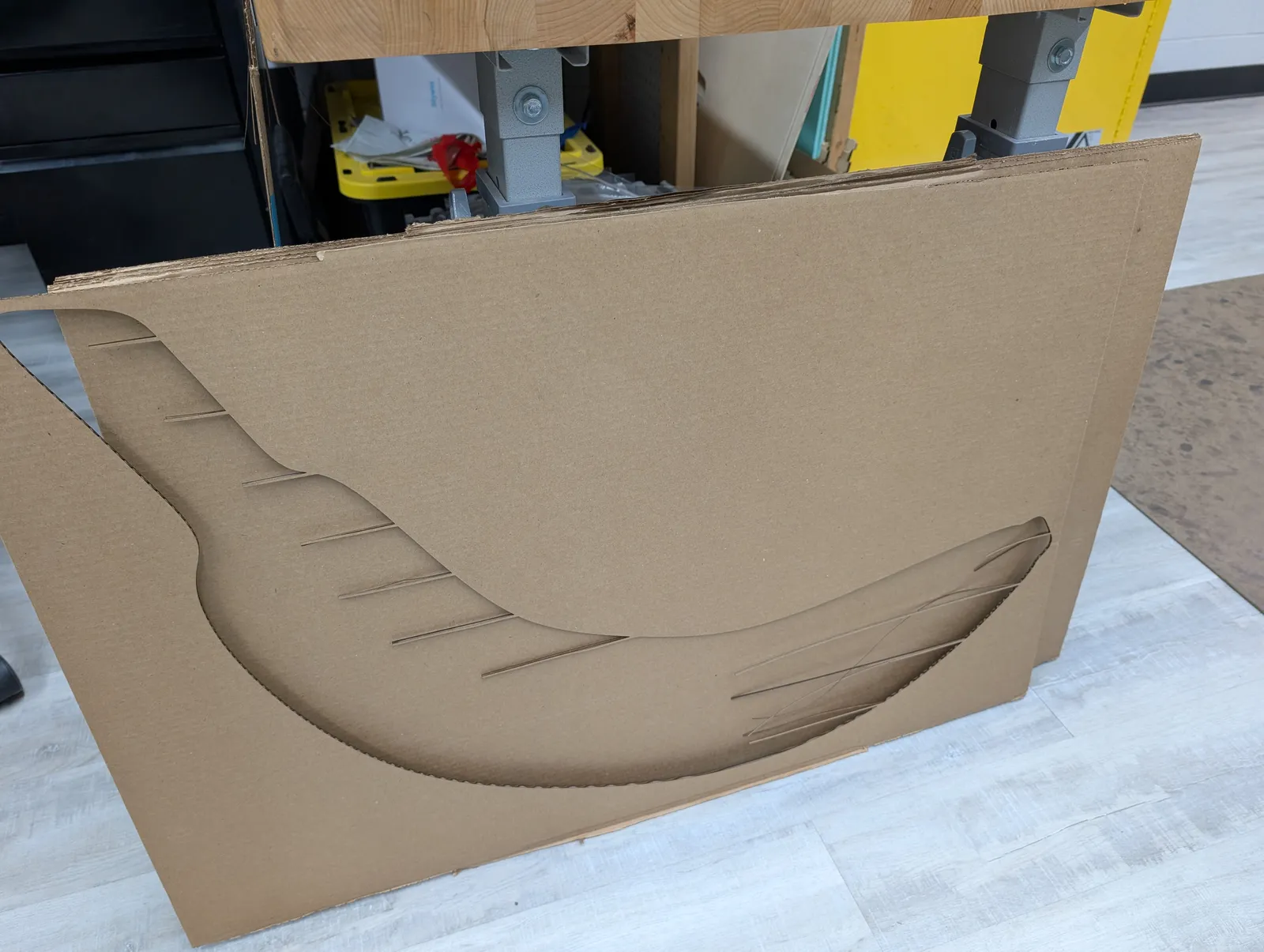
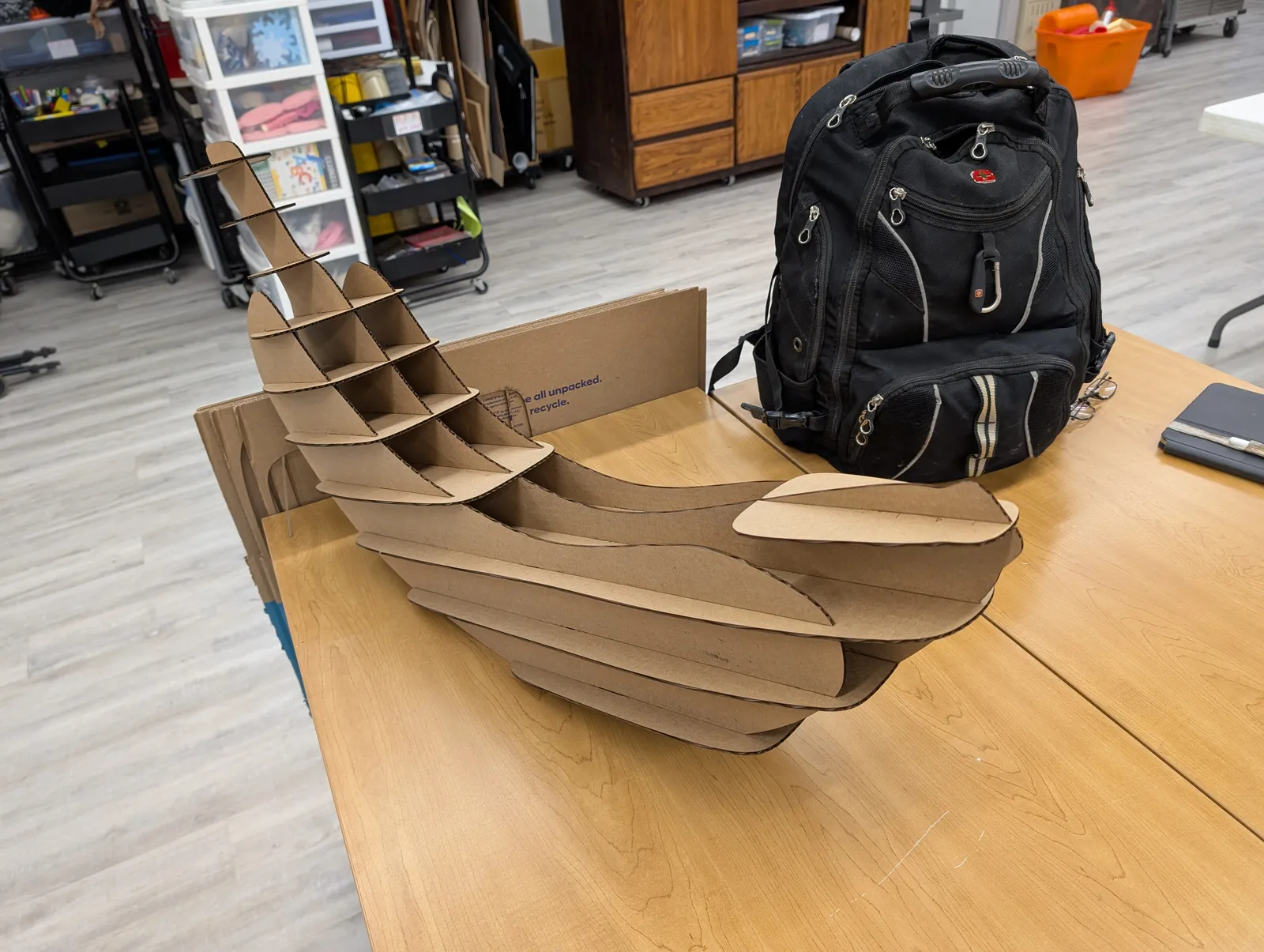
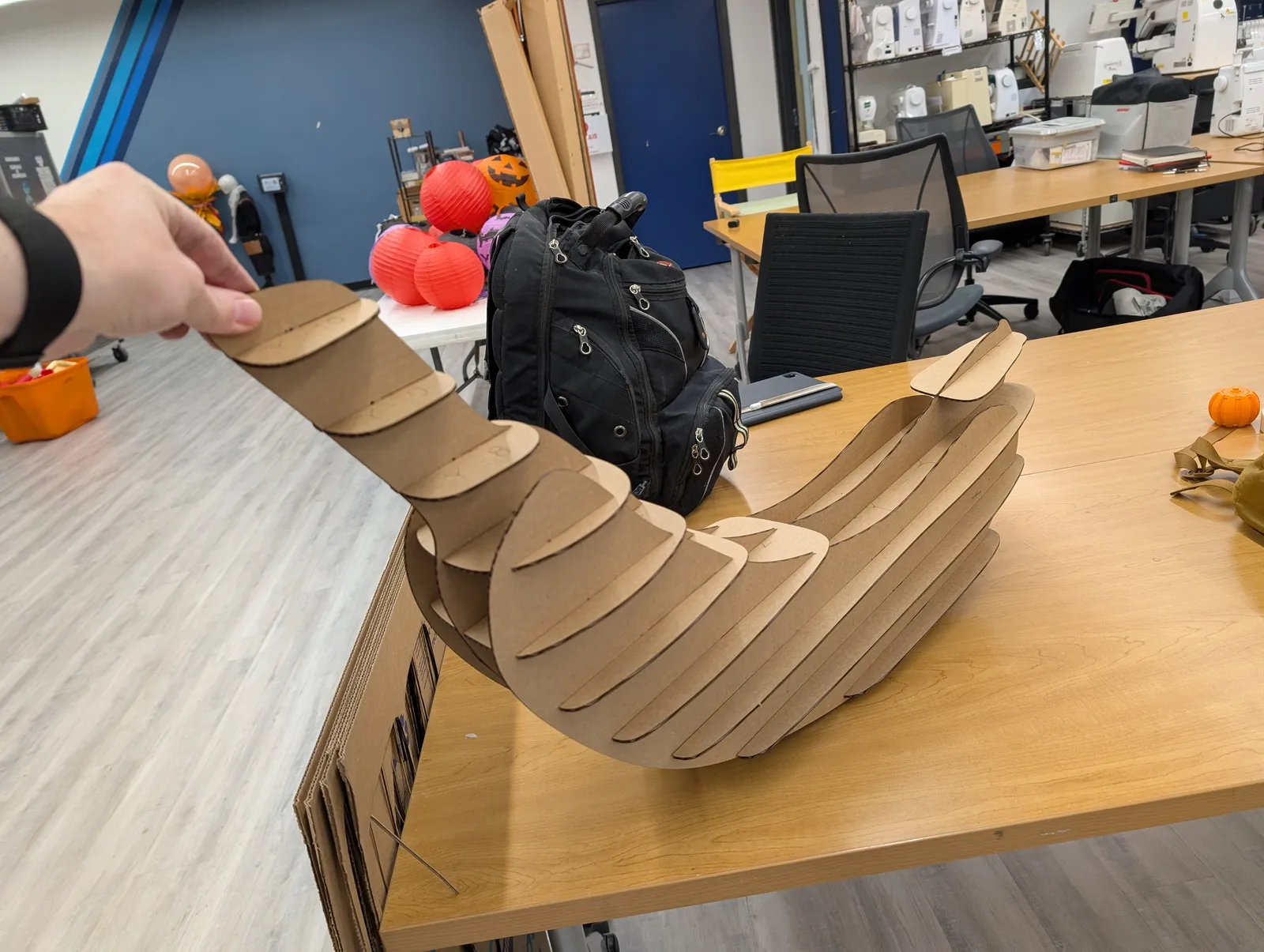
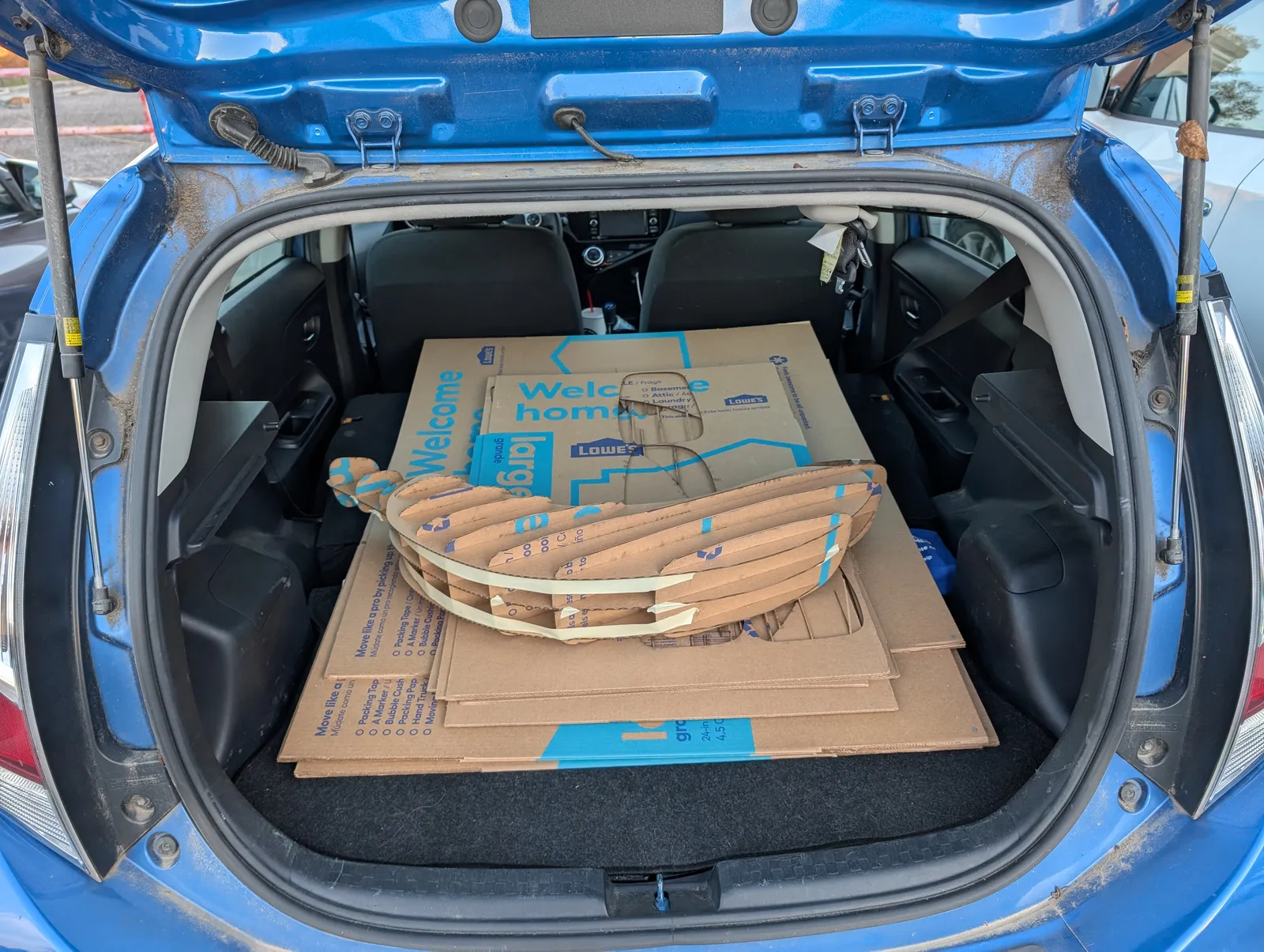
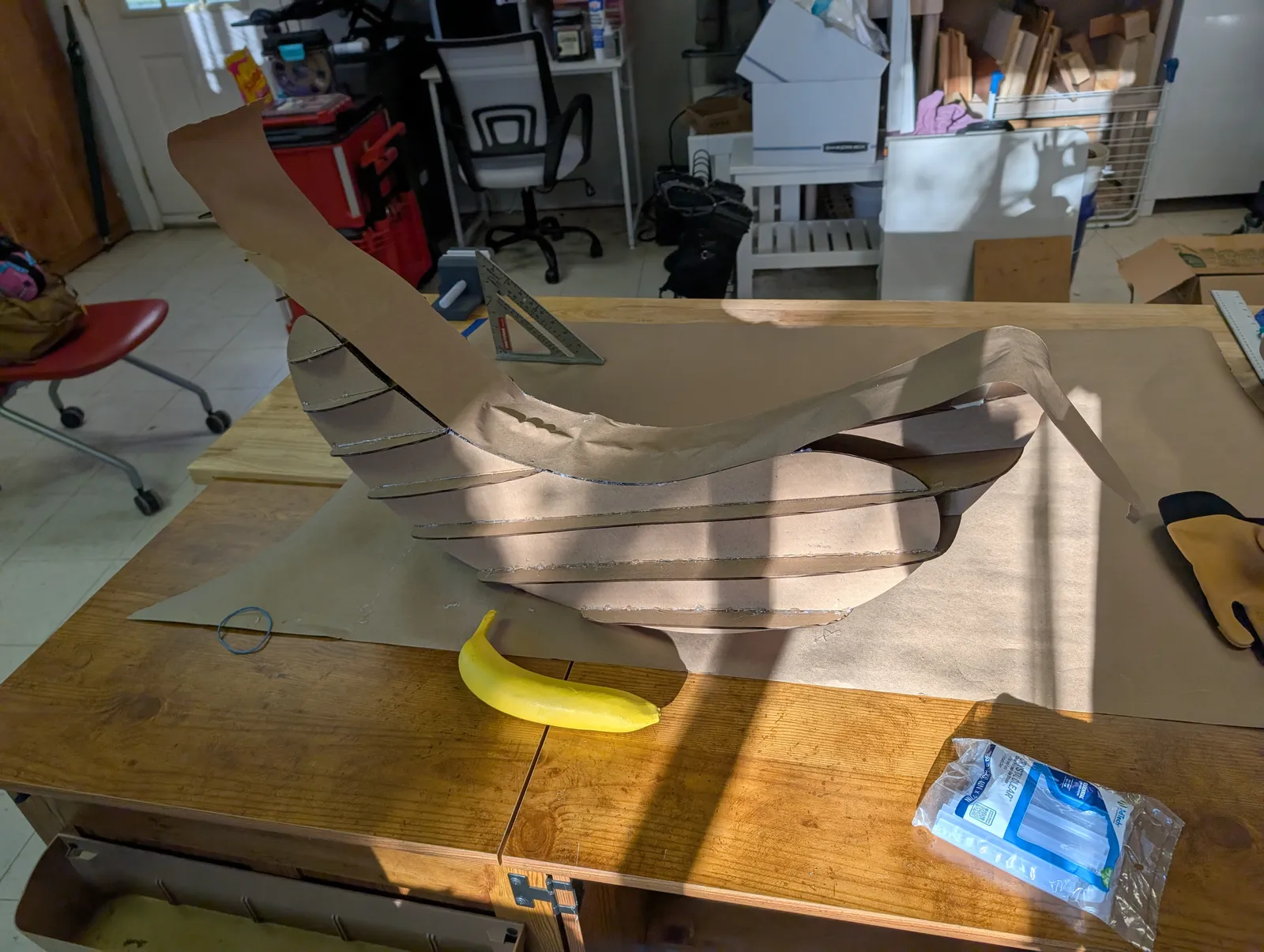
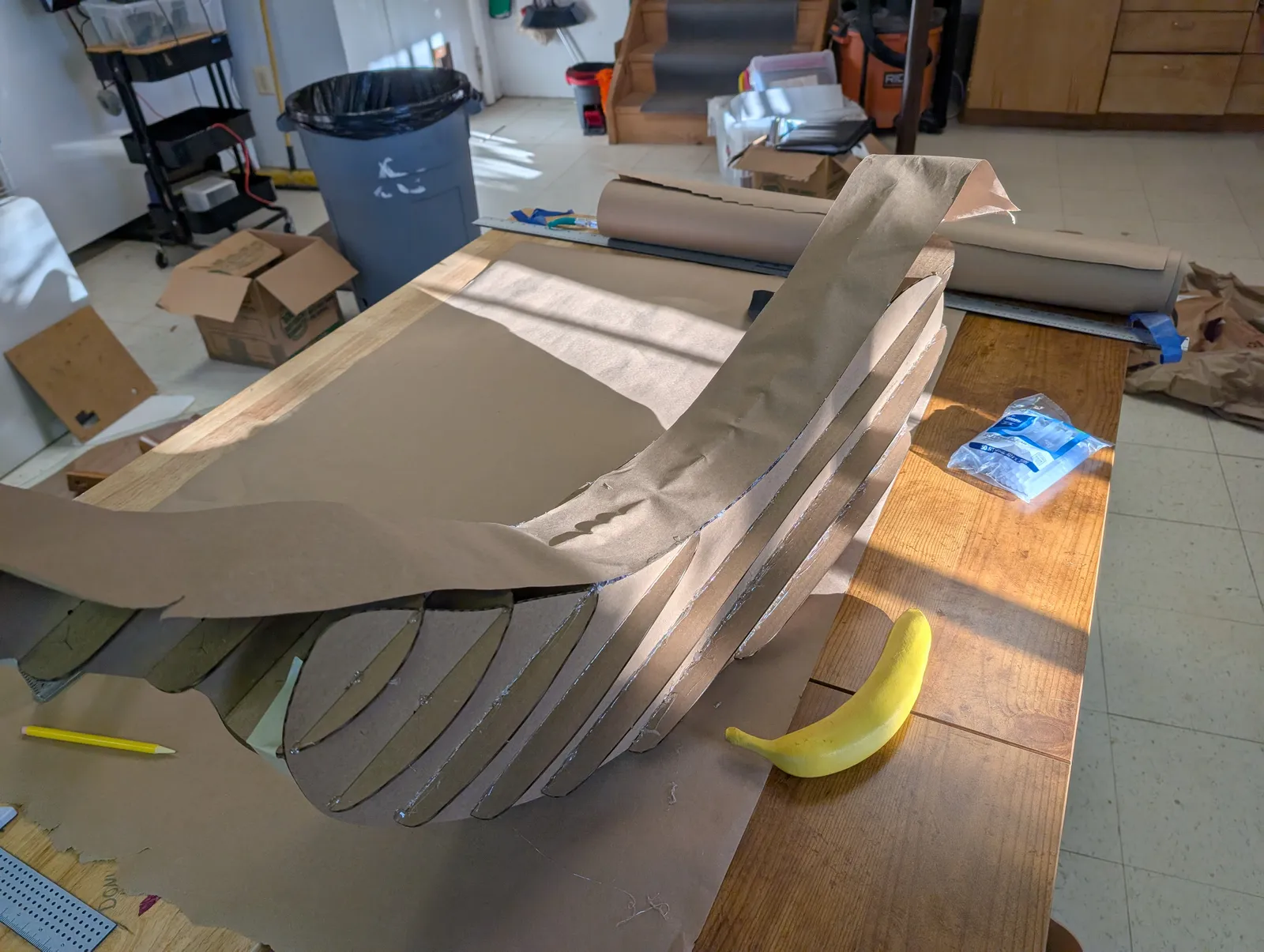
A 3D Model used for the 3D printed banana was manipulated to generate a sliced series of interlocking vector shapes, which, when printed, cut, and assembled, act as a 3D puzzle to produce the end shape in a skeleton-like model. A laser cutter was leveraged to cut the interlocking slices at the largest size the laser could accommodate. This yielded a 35 inch long banana when assembled, over 38 inches with the curve if it were straight. This is the first successful large banana progress in many days. If damaged in further testing, it can be reproduced in under 1 hour for about $6 from two new large size cardboard boxes.
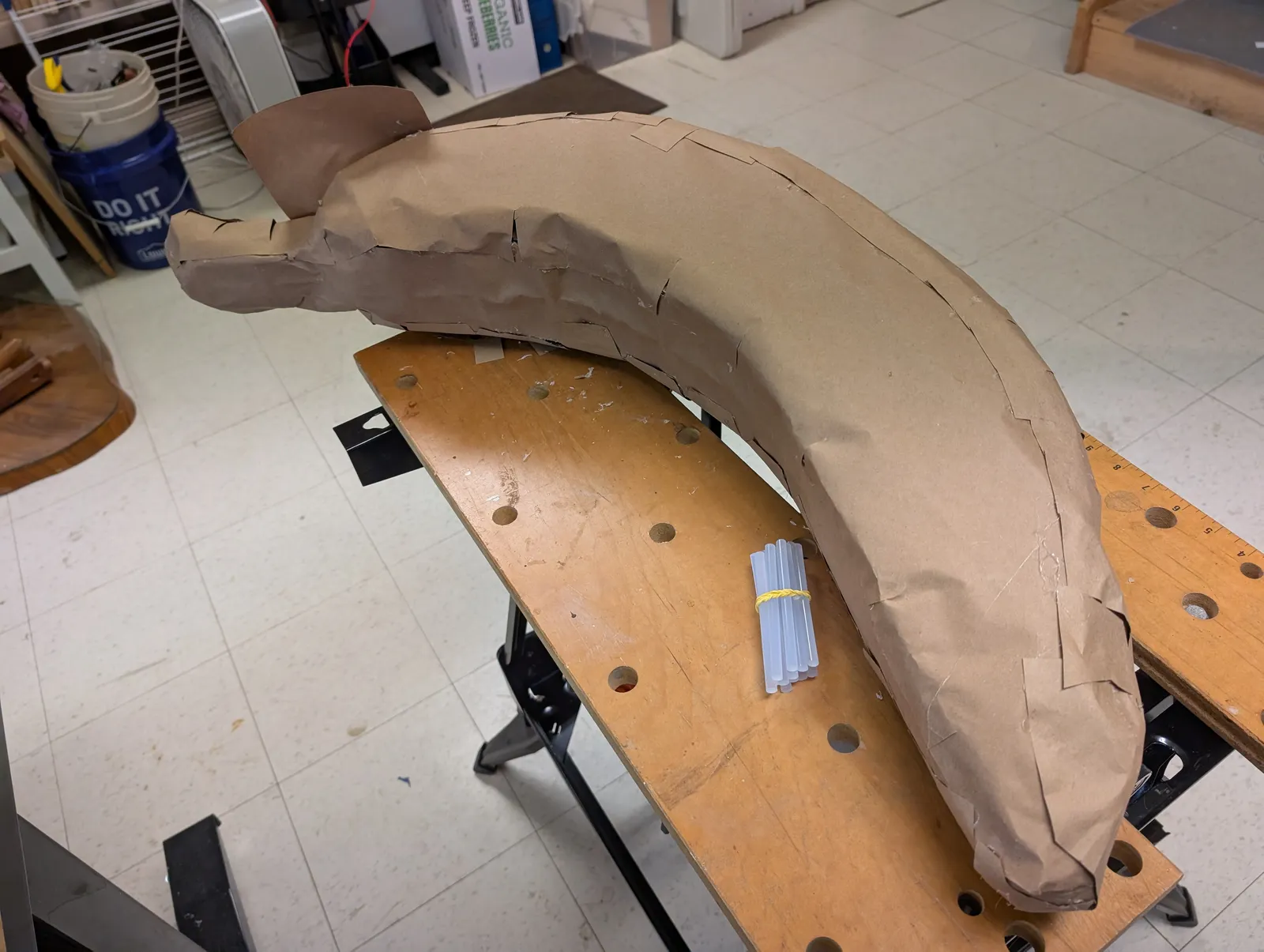
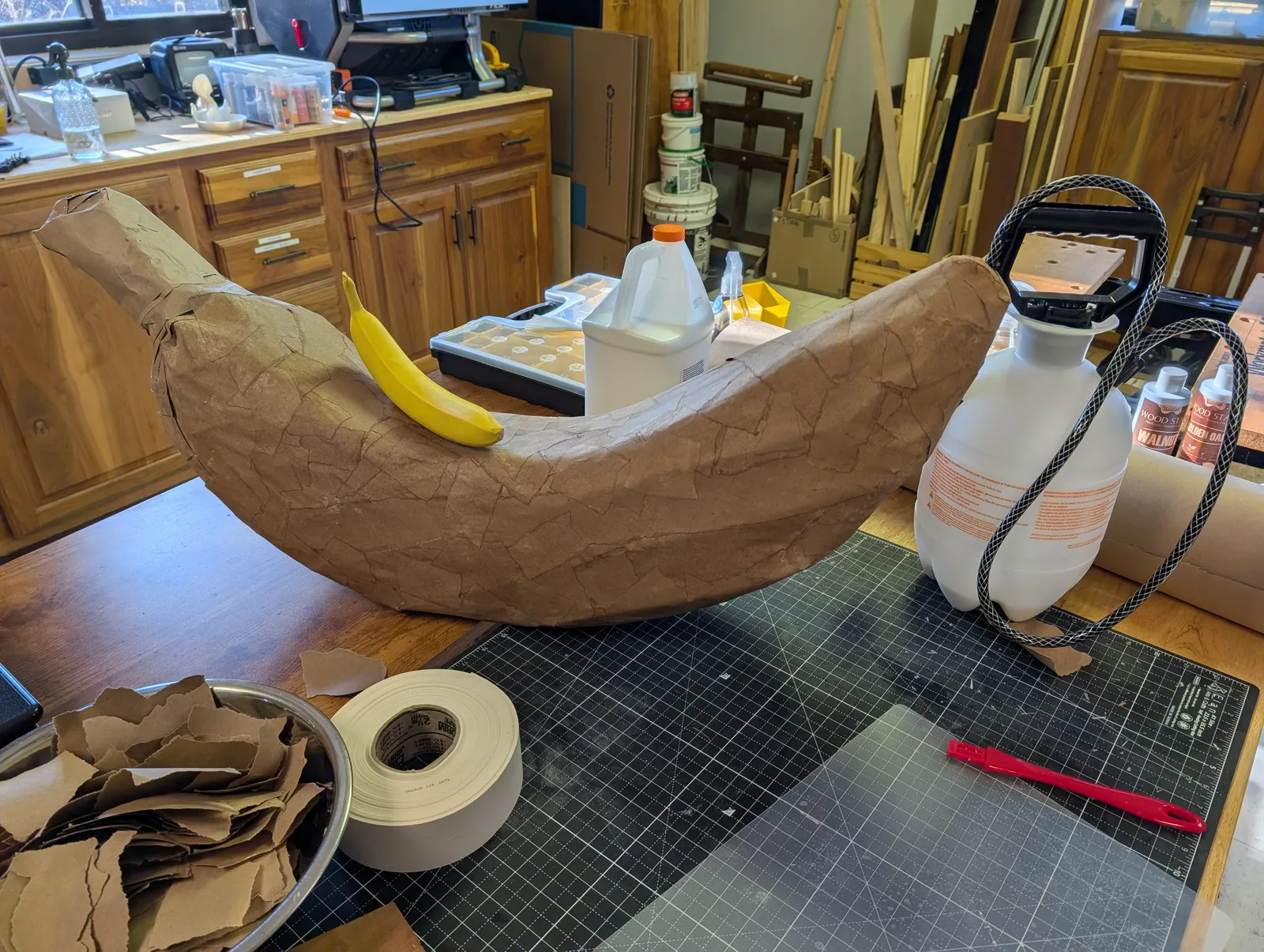
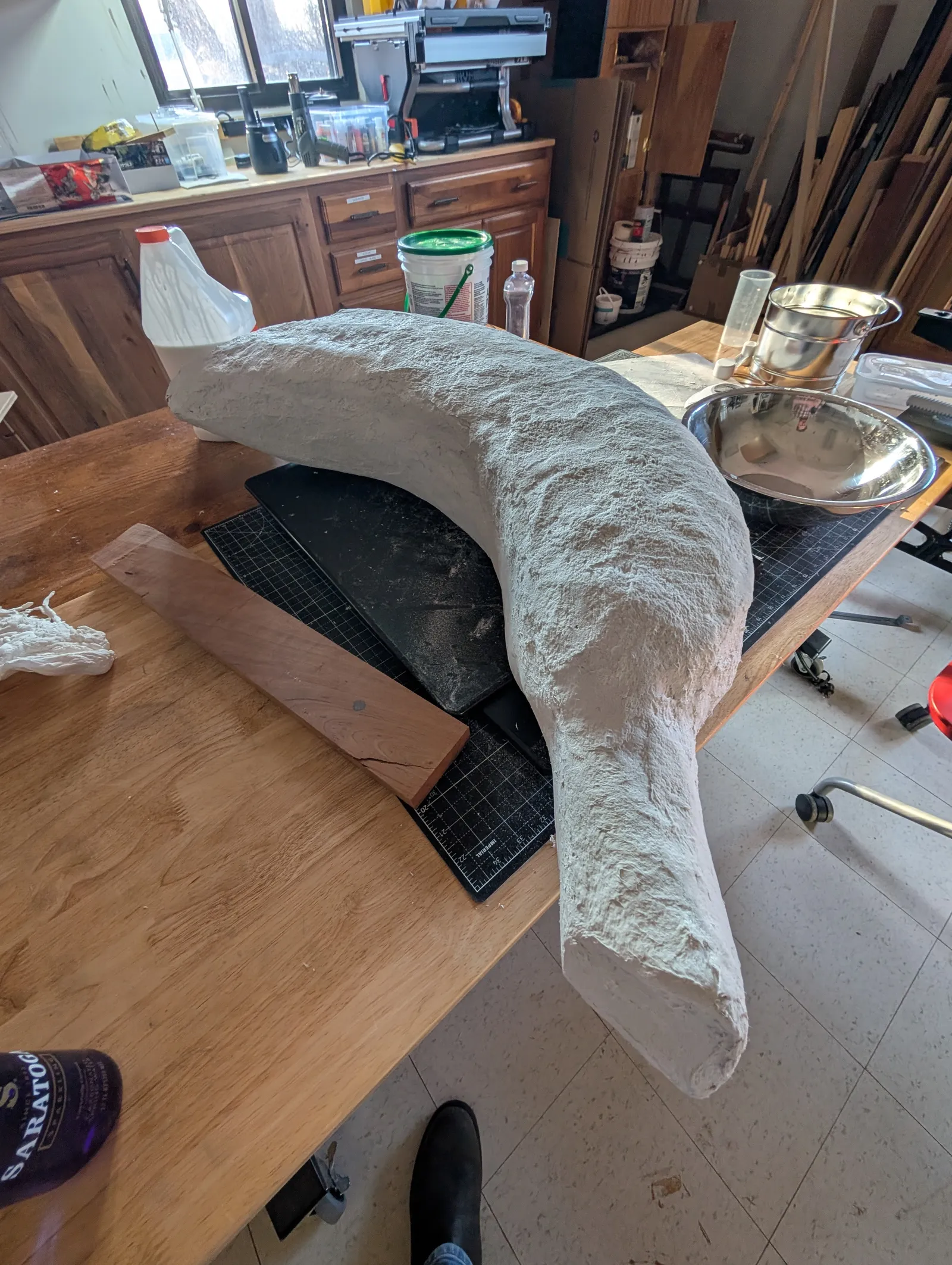
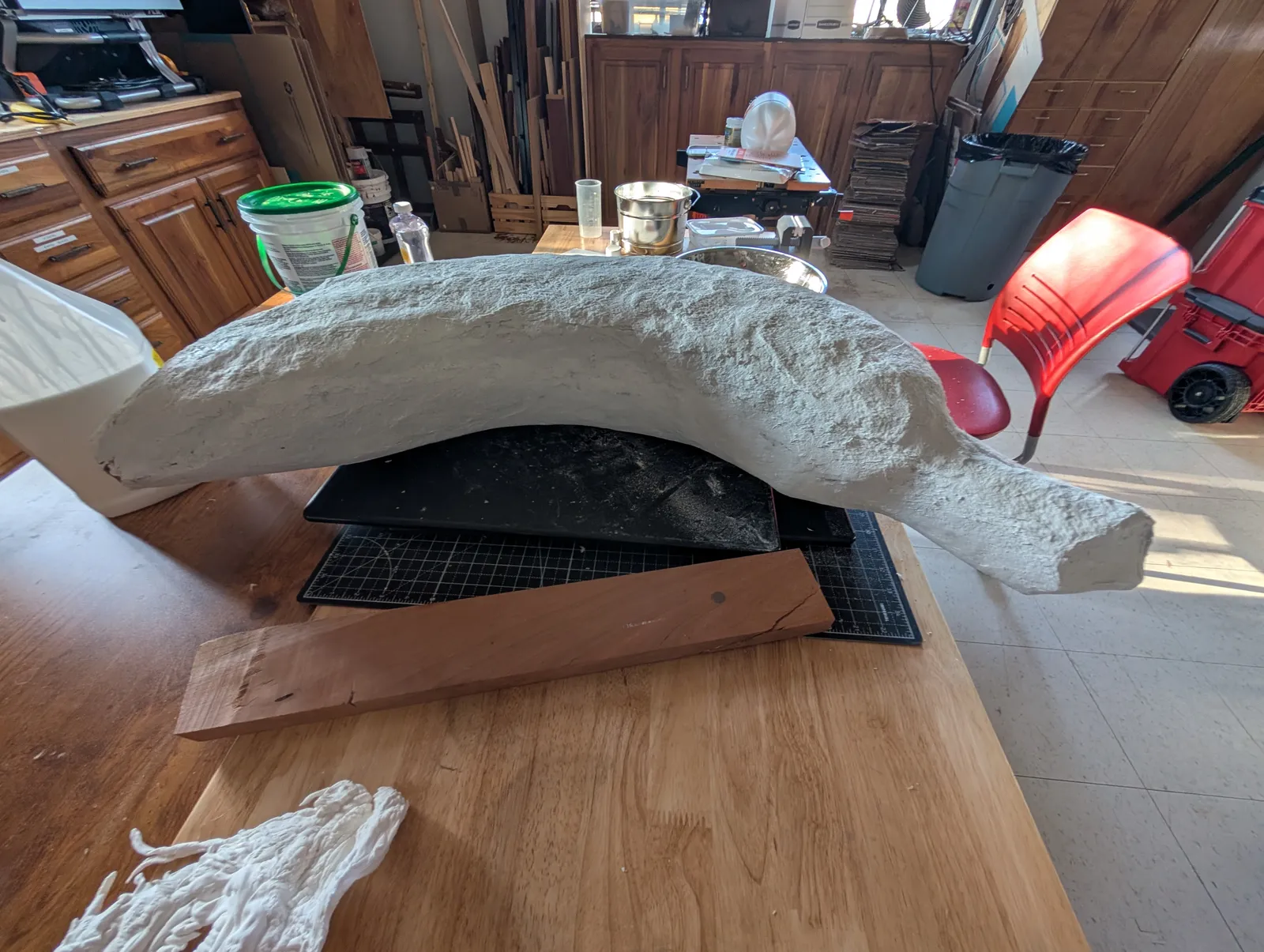
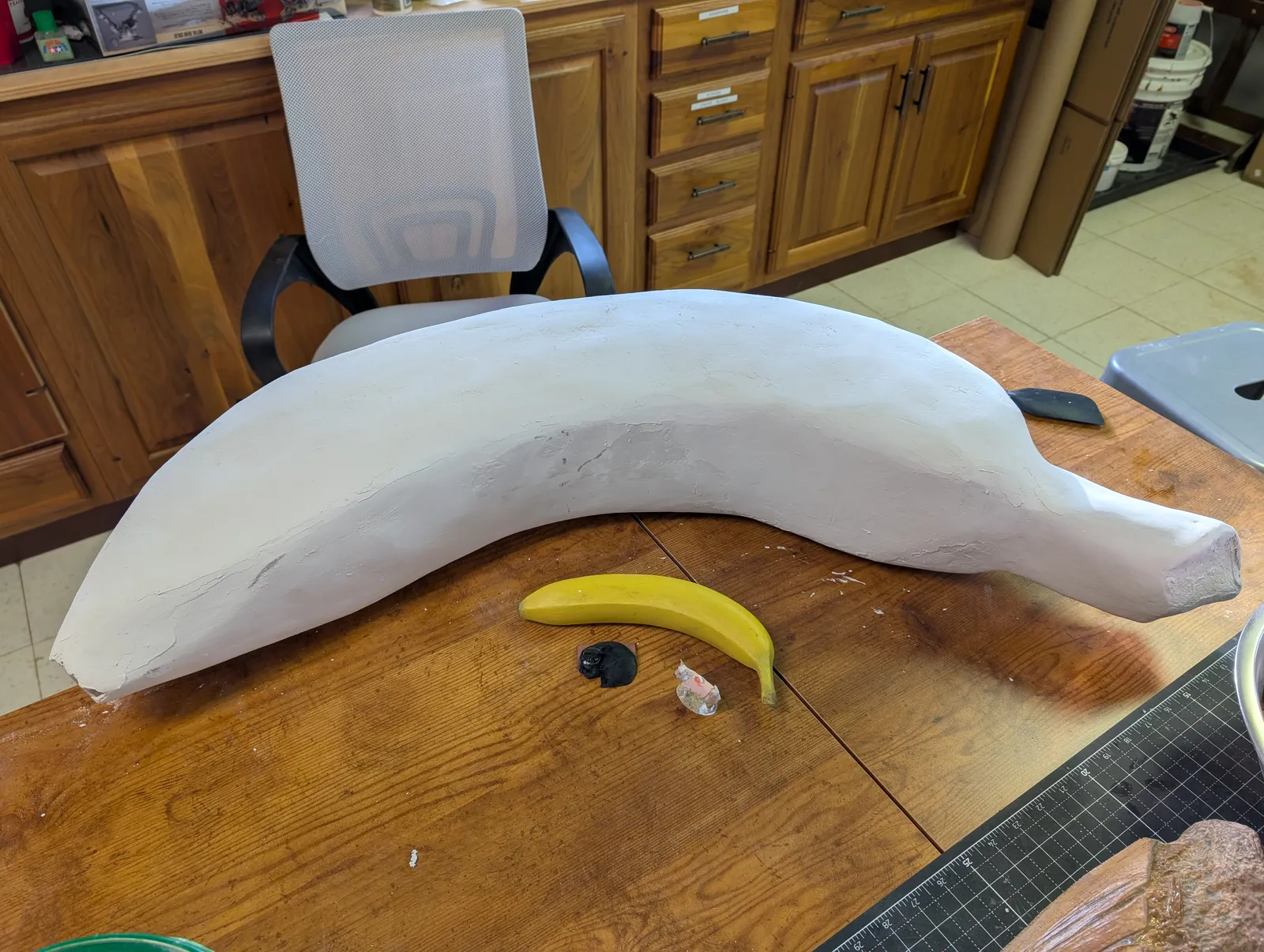
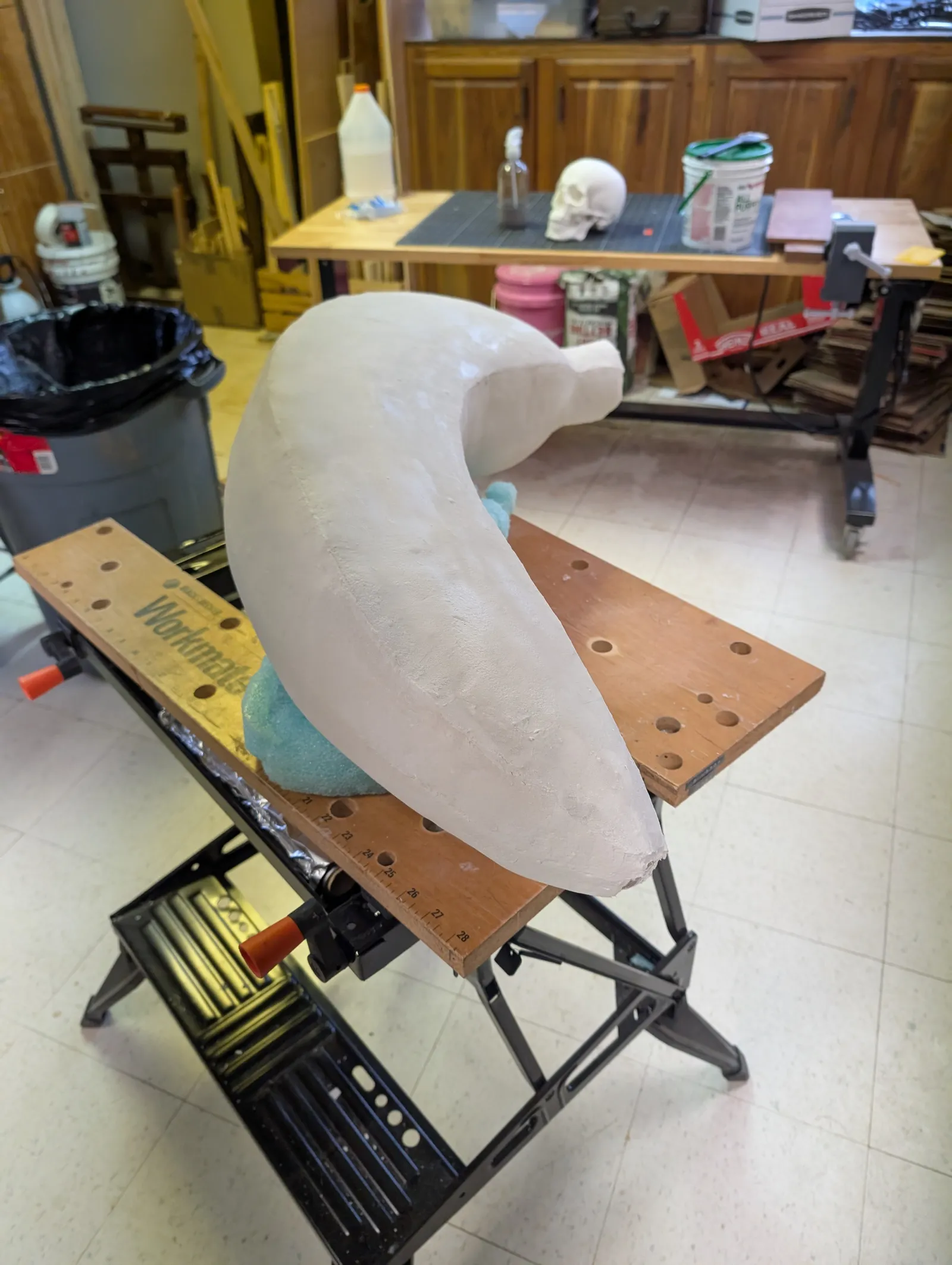
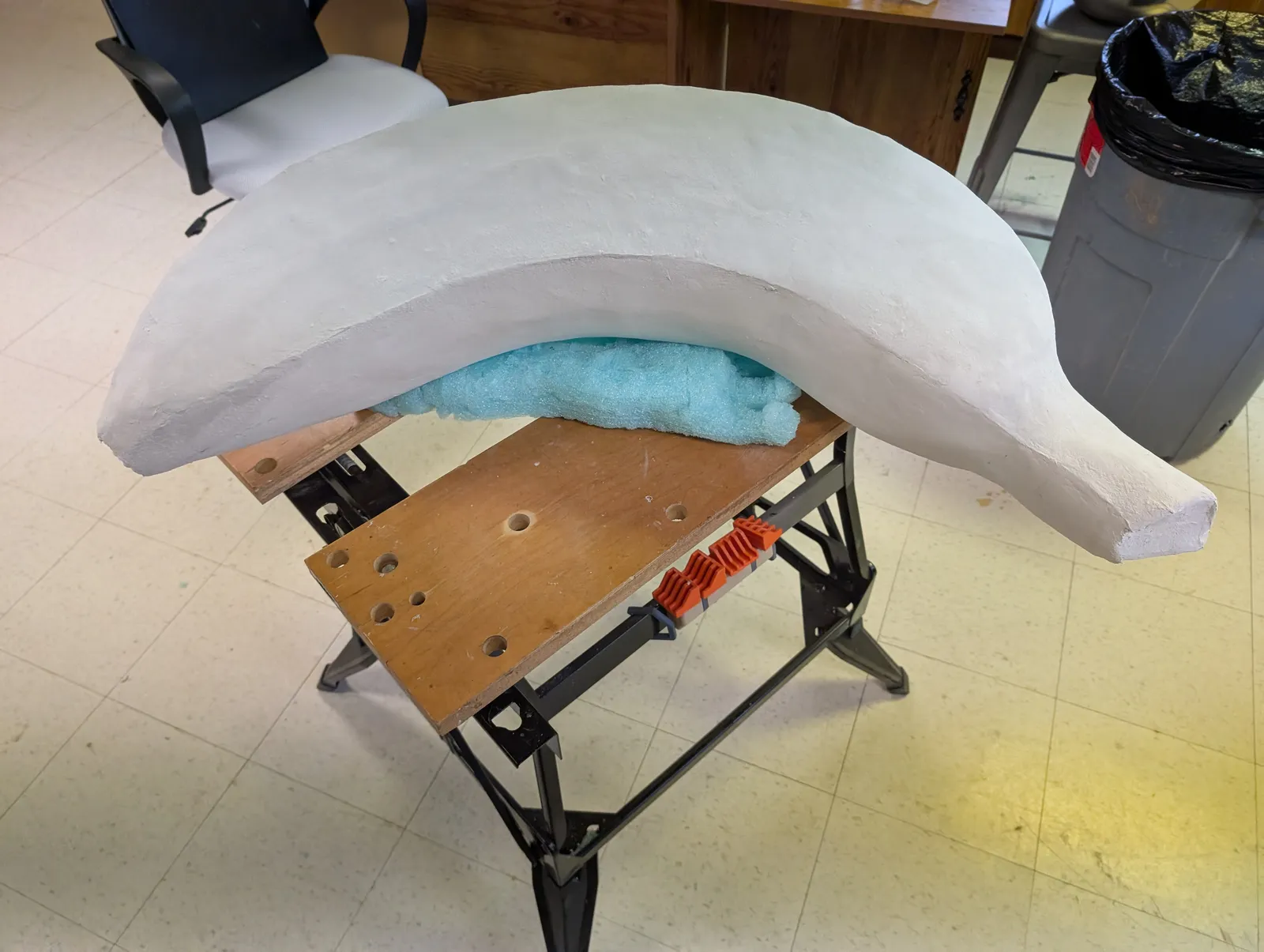
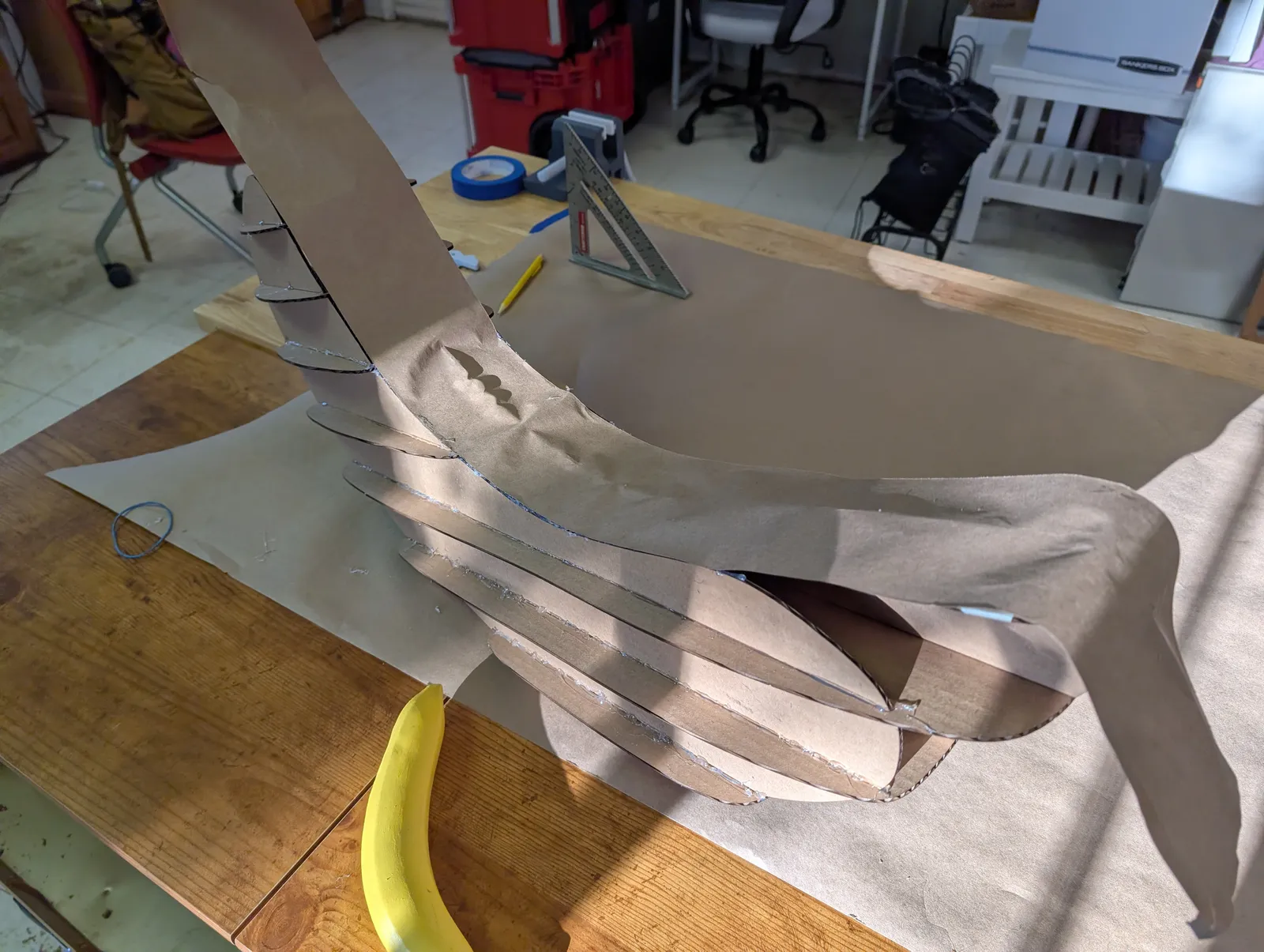
The outer skin would be made of brown recycled kraft paper. A rough panel was measured and cut and affixed with glue. The result makes the skeleton ribs of the 3D model very prominent. Initially a minimum number of paper sheets were going to be used to simulate the continuous appearance of an unbroken banana peel which lacks many textures that would result from a paper mache type covering. Once completed, another filler material will need to be applied and shaped to give an even surface.
Not everything we try to make gets made the way we wanted. Make-fail is part of the process whenever trying something new. Check here for further updates as this project continues.